
By trade
Plastering calculators
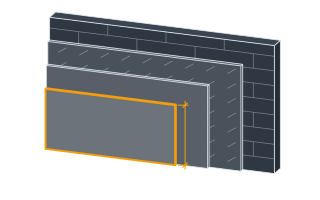
Plaster is bought by the bag and used by the coat, and the same area takes a different quantity on every background. A suction-hungry block wall, a skimmed board and a lathed elevation are three different orders for one square metre.
- 12Calculators
- 2Parts of the site
How plastering is measured
Square metres per coat at a thickness, converted to bags by the coverage the product quotes for that thickness — which is a quantity per coat, not per wall. Render is mixed by proportion, so the cement, lime and sand are three orders from one volume.
Renovation & Construction2
Materials & Quantities10
- Float and Set Plaster Calculator
- Gypsum Plaster Brown Coat Volume Calculator
- Gypsum Plaster Finish Coat Volume Calculator
- Gypsum Plaster Scratch Coat Volume Calculator
- Plaster Angle and Stop Bead Calculator
- Render and Plaster Mix Calculator, Coat by Coat
- Skim Coat Plaster Calculator
- Stucco Vertical Control Joint Spacing Calculator
- Stucco/EIFS Expansion Joint Layout Calculator
- Traditional 3-Coat Stucco Plaster Volume & Mass Calculator
What gets left off a plastering order
- The background. Coverage figures are quoted on a flat, low-suction surface, and very little of a real building is one.
- Beads and stops: angle, stop and movement beads are linear items whose quantity comes from the elevation's edges rather than its area.
- Scaffolding and access for external render, which is usually a larger line than the render.
- Drying time between coats, which is programme rather than material and is the constraint that actually decides the finish date.
Job takeoffs17
Where plasterers meet the rest of the job: each runs one of these calculators, with every other trade in the same job beside it.
- Basement or cellar conversion
- Chimney breast removal
- Damp remediation and replastering
- Extension shell, one or two storeys
- External wall insulation (EWI, EIFS)
- Full house rewire
- Garage conversion
- Garden room or backyard office
- Internal wall removal
- Kitchen refit
- Loft conversion with a dormer
- Loft room with rooflights
- New window or door opening in an outside wall
- Party wall soundproofing
- Plaster a room
- Porch addition
- Staircase replacement
Worked examples2
A real job estimated step by step, with this trade's steps counted.
Calculator examples1
One job through one of this trade's calculators, with the calculator's own working shown step by step.
Comparisons3
Two ways of doing the same work, weighed against each other.
Planners2
Work this trade out from a space rather than from a job.