
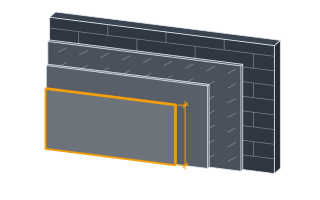
SettingsSettings for this calculationUS
The total area to receive the scratch coat.
Measure the actual lath or substrate area that will be plastered.
The applied thickness of the scratch coat.
The scratch coat is typically the thickest of the three plaster coats, commonly around 10 mm, since it fills and keys into the lath.
Scratch coat plaster volume
77.8 gal
- Equivalent volume
- 0.39 yd³
They open the calculator with your figures already in it
Gypsum Plaster Scratch Coat Volume Calculator: 77.8 gal — shown in imperial, US market. The link sets both, so the result they see is the one on your screen.
Show calculation logicHide calculation logic
How this was calculated
Formula source(s)
- Three-coat plaster system volume per coat = wall area × coat thickness; the scratch coat is typically the thickest of the three coats (commonly ~10 mm)
Inputs used
- Wall/Ceiling Area
- 320 sq ft
- Scratch Coat Thickness
- 0.39 in
Intermediate steps
- Equivalent volume
- 0.39 yd³
What this calculation does not cover
- Gives the volume on the wall, and plaster is bought in bags. Turning one into the other needs the product's yield: gypsum basecoat is mixed with sand at a ratio the manufacturer sets, commonly somewhere around 2:1 to 3:1 by volume for a scratch coat, and one bag of neat plaster covers a very different area depending on which ratio is used and how the sand is graded. Read the yield off the bag and divide - a bare volume cannot be ordered.
- Says nothing about how much never reaches the wall. Hand-applied basecoat is lost off the hawk, off the trowel, onto the boards, and in whatever is left in the bath when the mix goes off - and gypsum basecoat sets on a clock that cannot be extended, so any batch mixed larger than the plasterer can hang inside that window is thrown away. Batch to the working time rather than to the total, and expect the practical figure for droppings and part-batches to sit well above the clean number this sum returns.
- One coat out of a system that is specified as a total. Interior gypsum plaster over metal lath is normally required to reach a nominal total thickness, commonly quoted at 5/8 in (16 mm) measured from the face of the lath across scratch, brown and finish - and where the wall or ceiling carries a fire rating, that full thickness and that lath are part of what was tested. Trimming the scratch coat here only pushes material into the brown coat; taking it out of the total is a different assembly.
Estimated cost — your price
This site holds no price list for this material — local prices vary too much to publish honestly. Enter your supplier's price and the result is costed with it.
Computed in your browser — nothing you enter is uploaded. Presented in US customary units and US trade terminology. Where a formula follows a published standard, that standard and its edition are cited beside it on this page; where none governs, the page says so. Local amendments override model codes — verify against the code in force where you build.
Sources checked 2026-09-06 · in the site-wide review of 2026-09-06 · v1.0.1
Regulatory standards & verification citations1
- Three-coat plaster system volume per coat = wall area × coat thickness; the scratch coat is typically the thickest of the three coats (commonly ~10 mm)
Cite this page
Your workspace
Most jobs need more than one number. Add the calculators you need next and they open right here, underneath this one — your figures stay on screen and nothing is lost to a page change.
Tools and safety for this job
To skim a plaster finish. Generic types, no brands, no prices.
Protection this work requires
- Wet cement and lime burn skin and eyes painlessly until the damage is done: waterproof gloves to EN 374, safety glasses whenever the mix can splash, and never kneel in wet mix in permeable trousers.
- Most fatal falls on small jobs are from under three metres: use a tower or a ladder tied at the top, and never work off the top two rungs.
Show the 4 tools this job needsHide tools
Essential
Mixing bucket or tub
Paddle mixer
Plastering trowel and hawk
Recommended
Step ladder
what each plastering tool is for, and the spec that decides which to buy where one does.