Air Changes Per Hour (ACH50) Calculator
Calculate a building's ACH50 airtightness metric from a blower door test's CFM50 reading.
Imperial / Metric
 Craft Quantities
Calculators
R-value, insulation quantity, and energy-savings estimators.
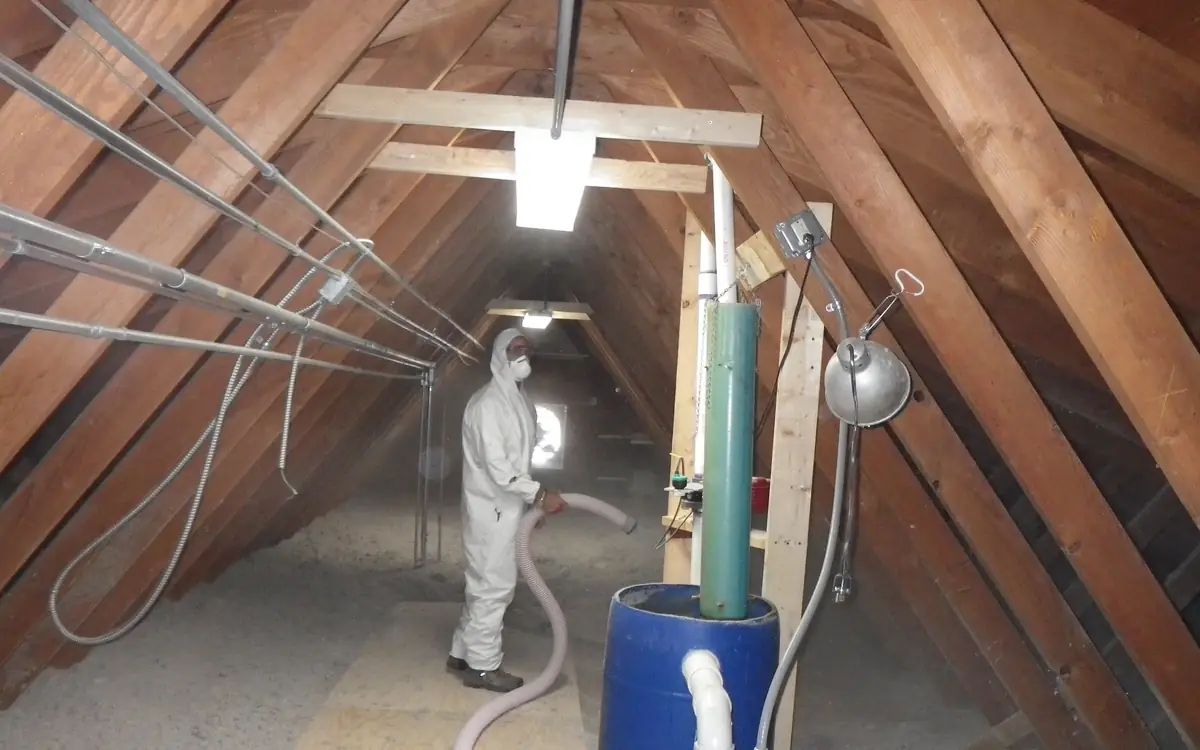
Thermal performance calculations are simple arithmetic wrapped around one difficult reality: the assembly you build is not the assembly you specified. Thermal bridging through studs, joists and fixings, compression of batts, and gaps at the edges all reduce real performance below the nominal figure, sometimes substantially. The tools here compute the nominal value and say plainly where the installed value will differ.
Air movement matters as much as R-value and is not measured by it. Insulation slows conduction; it does nothing about air passing through or around it, and a well-insulated wall with an interrupted air barrier can perform worse than a modest wall that is sealed. Several pages in this category exist specifically to size the air-sealing side of that pair.
Calculate a building's ACH50 airtightness metric from a blower door test's CFM50 reading.
Air permeability (q50) from an air tightness test's flow over the envelope area, or the fan flow a target needs, with the n50 air change rate.
Net free vent area for an attic or cold loft by the IRC, NBC, BS 5250 or NCC, split between eaves intake and high exhaust, and the vents that provide it.
Estimate how many rafter baffle vents you need to keep soffit airflow clear above insulation.
Turn an attic's bypass schedule (chases, soffits, housings, plate runs, penetrations, flues) into sealant tubes, foam cans, rigid board and sheet metal.
Find how much more blown-in insulation to add to reach your target attic R-value.
Estimate how many rolls of reflective radiant barrier foil you need for an attic roof deck.
Find the target CFM50 blower door reading needed to hit a specific ACH50 airtightness goal.
Estimate how many tubes of caulk you need to seal the exterior trim around doors and windows.
Find the recommended dehumidifier capacity (pints/day) for a basement or room based on area and dampness level.
Estimate how much duct mastic sealant you need to seal your ductwork's seams and joints.
The floor area an electric heating mat can cover, room area less fixtures and the wall setback, and the largest standard mat size that fits it.
Estimate the required continuous ventilation rate (CFM or L/s) for a whole-house ERV or HRV, per the ASHRAE 62.2 formula.
Count semi-rigid mineral wool boards for continuous exterior insulation, including multi-layer build-ups with staggered joints.
Estimate how many 4x8 ft (2400x1200 mm) rigid foam insulation sheets (XPS, EPS, or polyiso) you need.
Estimate how many packages of batt insulation you need to cover an area, using your product's stated coverage.
Minimum insulation by the 2021 IECC for a US climate zone or the 2020 NBC for a Canadian one: ceiling, walls, floor, basement, slab and window figures.
The insulation thickness a target U-value needs, from the other layers and the product's conductivity, and the U-value a board you can buy reaches.
Estimate how many foam pipe insulation sleeves you need to cover a run of piping.
Add up the R-values of layered materials in a wall, floor, or ceiling assembly to get the total insulating value.
Convert an IP R-value into metric RSI, so a US insulation rating can be read against a Canadian or European specification.
Convert thermal resistance (R-value) into thermal transmittance (U-value) for heat-loss calculations.
Estimate how many foam board sheets you need to insulate the rim joist band around a house's perimeter.
Convert a metric RSI rating into the IP R-value US product labels and codes are written in.
Estimate how many DIY spray foam kits you need based on area and application thickness.
The surface temperature factor fRsi, from a U-value or a surface temperature, beside the critical factor BRE IP 1/06 sets for the building type.
The heat lost through an element's thermal bridges, junctions as ψ times length and point bridges as χ times count, and what they add to its U-value.
Calculate a wall assembly's true effective R-value accounting for heat loss through framing (thermal bridging).
Convert a US U-factor, from an NFRC label or an IECC or ASHRAE 90.1 table, into the metric U-value UK and European documents use, with R-value and RSI.
Convert a metric U-value, as UK and European documents state it, into the US U-factor — and see the thermal resistance in both systems beside it.
Convert a U-value from a specification or datasheet into the R-value used on insulation labelling.
Estimate how many rolls of 6-mil poly vapor barrier you need for a crawlspace or basement.
Estimate the linear feet or metres of weatherstripping needed to seal door and window openings.
Estimate how many rolls of insulating or solar window film you need to cover your windows.
Estimate the reduction in heat loss from upgrading to lower U-factor windows.