
By trade
Tiling calculators
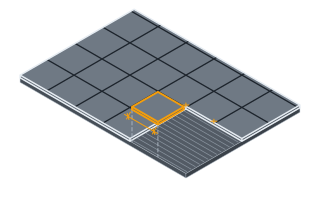
A tiling order is decided by the format rather than by the area. The same bathroom takes a different number of boxes, a different bed of adhesive and a different weight of grout depending on the size of the tile — and the cutting waste rises with it, because a large-format offcut fits nowhere else.
- 17Calculators
- 2Parts of the site
Tiling has a material hub: the Tile hub adds how its quantities are worked out, the documents each market cites, the guides and any takeoffs and worked examples.
How tiling is measured
Square metres converted to boxes, kilograms of adhesive at a bed depth set by the trowel and the tile's flatness, and kilograms of grout from the joint width, the joint depth and the tile's perimeter-to-area ratio. Every one of those depends on the format.
Renovation & Construction10
Materials & Quantities7
- Ceramic/Porcelain Tile Spacer Count Calculator
- Curtain Wall Perimeter Joint Width Calculator
- Diagonal Tile Layout 45° Corner Cut Waste Calculator
- Floor Crack Isolation Membrane Coverage Calculator
- Grout Weight Consumption Calculator
- Quarry Tile Acid-Resistant Grout Joint Volume Calculator
- Tile Edge Profile (Trim Strip) Linear Footage Calculator
What gets left off a tiling order
- The bed depth. A large tile needs a deeper notch and often a back-butter, which can double the adhesive against a small-format figure.
- Cuts at every perimeter, and the fact that a cut tile's offcut usually cannot be used on the opposite wall.
- The substrate: backer board, primer, decoupling or tanking under the tiles, each an area of its own.
- Trims, profiles and the silicone at every change of plane, which are linear and are always ordered late.
Job takeoffs11
Where tilers meet the rest of the job: each runs one of these calculators, with every other trade in the same job beside it.
Worked examples1
A real job estimated step by step, with this trade's steps counted.
Calculator examples2
One job through one of this trade's calculators, with the calculator's own working shown step by step.
Comparisons2
Two ways of doing the same work, weighed against each other.
Planners2
Work this trade out from a space rather than from a job.