
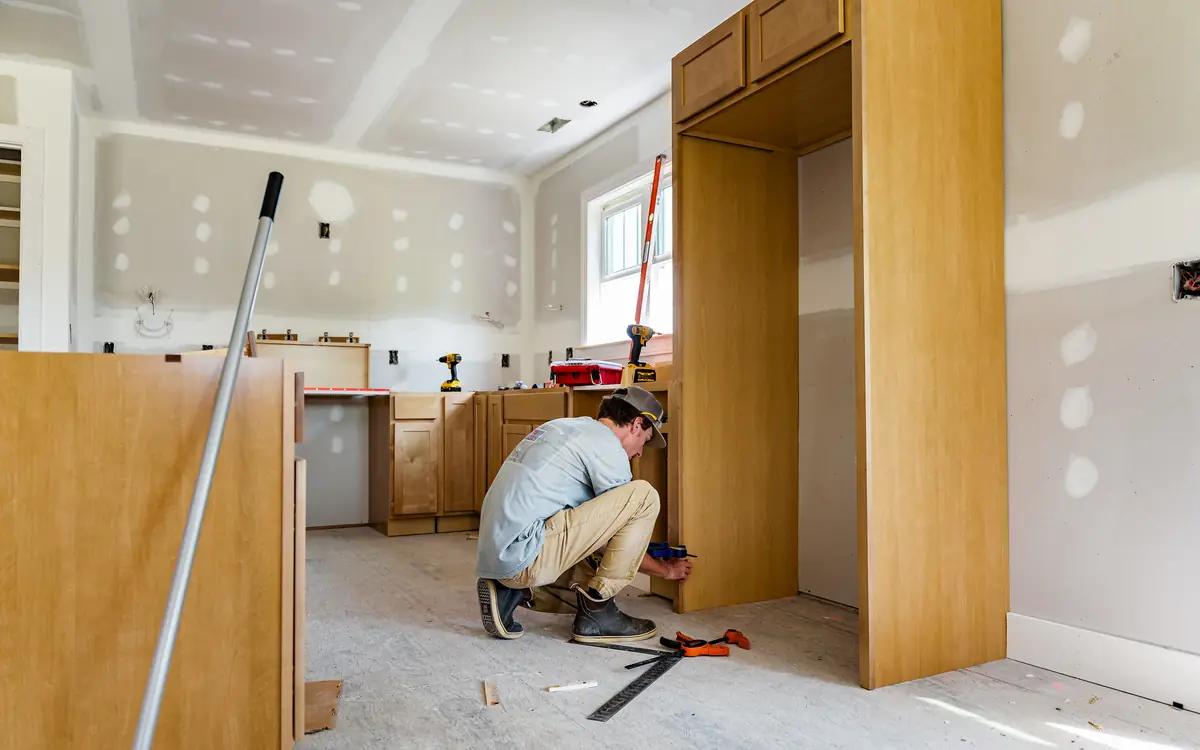
The job
Modelled, not recorded. Every figure here is the answer the Floor & Wall Tile Calculator gives for these inputs, written down in both unit systems and re-run whenever the site is built. No job was carried out, so there is no measured overrun on this page.
The floor is a small bathroom with a shower stall rather than a tub, tiled wall to wall: 40 sq ft (3.72 m²) measured at the floor, with the toilet and a pedestal sink set on top of the finished tile. The shower floor is a separate job with its own slope and its own tile, so it is not in the area.
The tile is a 24 in by 12 in porcelain plank, a common bathroom floor format in the US, sold 8 to a box. It is laid in an offset, or brick, bond, which the calculator gives a larger cutting allowance than a straight lay because every other row starts with a cut piece.
The pattern is the input that sets the allowance here: the calculator takes the waste percentage from the lay pattern, using the ranges its first source gives for straight, offset, diagonal and herringbone work, rather than asking for a number. That keeps the allowance tied to the reason for it.
The inputs, exactly as entered
| Input | Value | Why |
|---|---|---|
| Area to tile | 40 sq ft (3.72 m²) | Length times width of the floor, measured to the walls; the toilet and sink are tiled under, so nothing is taken off for them. |
| Tile length | 24 in (609.6 mm) | The long side of the plank as printed on the box, which is the nominal size; the actual tile is slightly smaller to allow for the grout joint. |
| Tile width | 12 in (304.8 mm) | The short side, read the same way. |
| Lay pattern | Brick / offset bond — 12% waste | An offset bond, every row shifted along by part of a tile, which the calculator allows for with a larger waste figure than a straight lay. |
| Tiles per box | 8 | Read from the box label of the tile actually chosen; boxes of the same size of tile differ between makers. |
The working, step by step
1. Tiles before waste
20 tiles
The floor area divided by the area of one tile gives 20 tiles, the count if no tile were ever cut, broken or rejected for its colour. On a floor with four walls, a doorway and a toilet flange, that figure is never the real one, but it is the base everything else is added to.
2. Waste applied
12 %
The offset pattern carries 12 %, from the calculator's pattern table, and that share is added to the bare count and rounded up to whole tiles, which gives the headline. In an offset bond the cuts at each end of a row are often too short to start the next row, which is what the larger figure pays for.
3. Boxes to order
3 boxes
The tiles are divided by the box quantity and rounded up: 3 boxes. This is the number to take to the counter. On a small room the box is a large step: a few tiles over a box boundary costs a whole box, which is why the variants below are read in boxes as well as tiles.
4. Area covered by the boxes
48 sq ft (4.46 m²)
The boxes together cover 48 sq ft, which can be read against the floor's own area to see the real margin being bought. Here most of the difference is the pattern allowance and the rest is the last box rounded up, so the margin is deliberate rather than accidental.
5. Spare after the job
1 tile
What the calculator expects to be left in the last box once the floor is laid: 1 tile on this job. Keep it with the box label, which carries the shade and batch; a tile cracked under a dropped bottle years later can only be matched from the same batch.
Tiles required
23 tiles
The order is 3 boxes, which holds the 23 tiles the floor needs with the pattern allowance included. Buy all of them from one shade and batch, which is printed on the box, and open them all before laying to mix tiles from different boxes across the floor. A bathroom floor is small enough that one extra box is worth considering for future repairs, a choice the calculator leaves to you.
What to buy
| Quantity | Figure | What it is for |
|---|---|---|
| Tiles required | 23 tiles | The number of tiles the floor takes once the pattern allowance is added, laid from the boxes below. |
| Boxes to order | 3 boxes | Whole boxes of the chosen tile, all from one shade and batch. |
The allowance, and what it does here
There is no free waste box on this calculator: the allowance comes from the pattern, at the figure the calculator's first source gives for that kind of lay. For this offset bond it is 12 %, applied to the bare tile count and rounded up. It covers end cuts, the cuts around the toilet flange and the door casing, and a tile or two that breaks on the cutter. It does not cover a floor that is out of square, where every tile against one wall is cut to a taper, and that is the room where an extra box is cheap insurance.
The common mistake
Buying tiles by the floor area instead of by the box
A floor area converted straight into tiles, or into boxes by dividing area by the box's printed coverage, leaves out the pattern allowance, and on a small room the answer can come out a whole box short. The reverse mistake is as common: adding a percentage for waste to an answer that already includes one, and buying two boxes more than the job takes. Run the pattern through the calculator once, take the box count it gives, and add a box only for future repairs, deliberately.
Change the job, and see what moves
The same floor, laid in herringbone
Lay pattern: Herringbone — 20% waste → 24 tiles
Lay the same planks in herringbone and the allowance rises to 20 %, so the floor needs 24 tiles. The order stays at 3 boxes, because the extra tiles still fit in the last box. Herringbone costs time at the saw far more than it costs tile on a floor this size, and the spare in the last box is what the pattern uses up.
The same floor, in a square tile
Tile length: 12 in (304.8 mm); Tile width: 12 in (304.8 mm); Tiles per box: 15 → 45 tiles
Choose a 12 in square tile instead, sold 15 to a box, and the count jumps to 45 tiles, because each tile is half the size. The boxes stay at 3 boxes only because this box holds more tiles: the tile count follows the tile size, and the box count follows the box.
What to run next
- Grout Calculator
The joints between the planks are filled with grout, counted from the same area, the tile size and the joint width.
- Thinset & Tile Adhesive Calculator
The tiles are bedded in thinset, and the trowel notch the tile size calls for decides how much the same floor takes.
- Tile Backer Board Calculator
Over a wood subfloor a tile floor is laid on cement board or a membrane, counted in sheets for the same area.
Sources
The method and every constant behind these figures belong to the Floor & Wall Tile Calculator, version 1.0.2, last verified 2026-09-17. It rests on:
- TCNA Handbook and BS 5385 both recommend 5-10% waste for a straight lay and 15-20% for a diagonal or herringbone pattern
- Tile is sold by the box; box coverage varies by format and must come from the supplier
Frequently asked questions
- How many tiles do I need for a 40 sq ft bathroom floor?
- In a 24 in by 12 in plank laid in an offset bond, the floor takes 23 tiles with the pattern's 12 % allowance, which is 3 boxes at 8 tiles to a box.
- How much extra tile should I buy for an offset pattern?
- The calculator allows 12 % for an offset or brick bond, against a smaller figure for a straight lay and a larger one for herringbone, from the ranges in its first source. The round-up to whole boxes then adds whatever is left in the last box.
- Does herringbone need more boxes?
- It needs more tiles, 24 tiles instead of 23 tiles, but on this floor the boxes stay at 3 boxes. On a larger floor the same pattern would add boxes.