
The job
Modelled, not recorded. Every figure here is the answer the Concrete Calculator gives for these inputs, written down in both unit systems and re-run whenever the site is built. No job was carried out, so there is no measured overrun on this page.
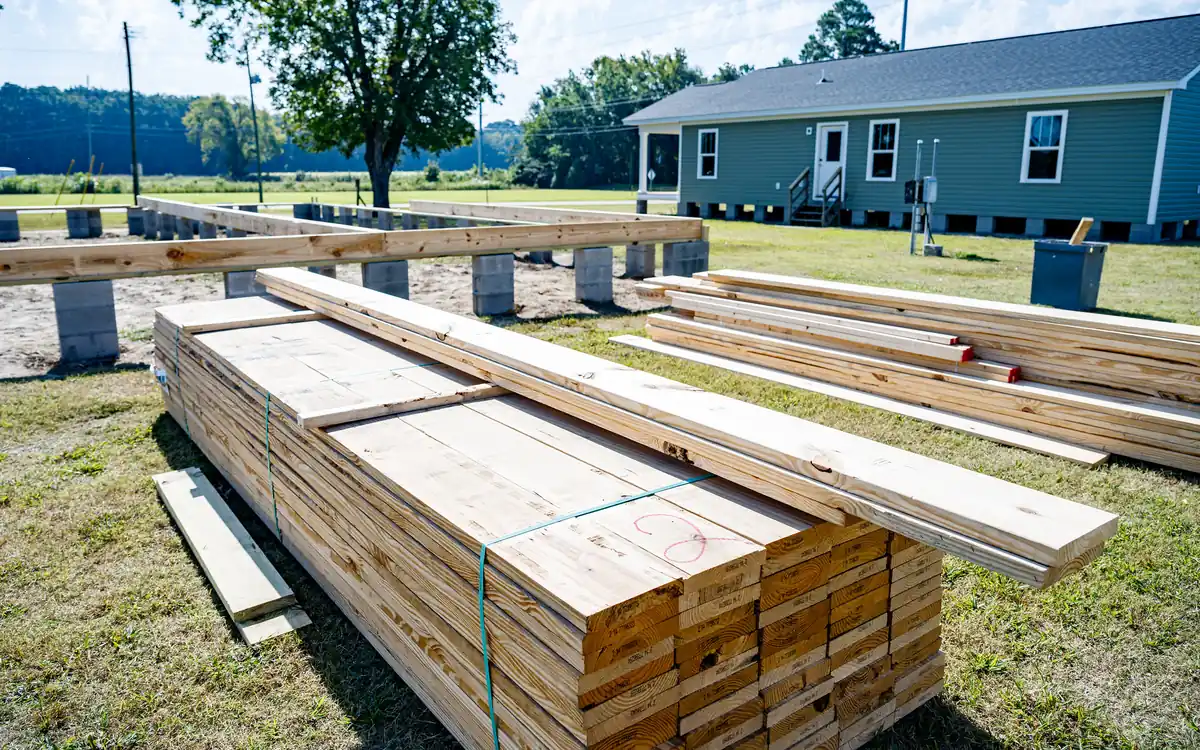
The job is the slab under a timber garden building: 3.6 m (11.81 ft) long and 2.4 m (7.87 ft) wide, which leaves a hand's width of concrete outside the shed's own floor on every side so rain runs off the edge instead of under the bearers. Shed makers publish the base size they want for each model, and the usual advice is to make the base a little larger than the floor, never smaller.
The depth is 10 cm, the figure the calculator opens on and the one commonly given for a light outbuilding on firm ground over a compacted hardcore layer. A workshop with a heavy bench, a ride-on mower or a log store is the case for going deeper, and the section on changing the job runs that. What the ground needs underneath, and whether the base wants mesh, is for the shed maker's instructions and anyone who has seen the soil; this page measures concrete and specifies nothing.
The allowance stays at the calculator's 10 per cent. On a slab this size the margin is a matter of a few barrow loads, but a pour that runs out with one corner unfilled cannot be finished later without a joint, and a cold joint across a shed base is where the first crack goes.
The inputs, exactly as entered
| Input | Value | Why |
|---|---|---|
| Slab Length | 3.6 m (11.81 ft) | The longer side between the inside faces of the timber forms, which is the finished size of the base. |
| Slab Width | 2.4 m (7.87 ft) | The shorter side, measured the same way; check both diagonals match before trusting either figure, because a base out of square is also out of size. |
| Slab Thickness | 10 cm (3.94 in) | Left at the calculator's own default. |
| Waste Factor (%) | 10 | Left at the calculator's own default. |
The working, step by step
1. Volume (no waste)
0.86 m³ (1.13 yd³)
Length times width times depth, all in metres, gives 0.86 m³: the space inside the forms if the hardcore under it were perfectly level. On a pour this small the figure is easiest to sanity-check as a picture, roughly the contents of the back of a small van, and that check is worth doing before anything is ordered.
2. Volume with waste factor
0.95 m³ (1.24 yd³)
The allowance is added as a share of that space, turning it into 0.95 m³. The table prints this row to two places and the headline below to more, so the two can differ in the last digit while being the same volume.
3. Cubic feet
33.56 ft³
The calculator restates the volume with its allowance in cubic feet, 33.56 ft³, because the bag yield in its second source is quoted in that unit. A UK reader can pass over the row: nothing sold at a builders' merchant here is measured in it.
4. 80 lb bags needed
56 bags
The last row divides that volume by the yield of one US bag and rounds up, giving 56 bags. It is shown on every reading of the calculator, but it counts a bag size a UK merchant does not stock, so it is not a shopping list here; it is a measure of scale, and the scale says this is a mixer job rather than a bucket job.
Estimated concrete needed
0.9504 m³
1.243 yd³
The figure to work from is 0.9504 m³, which is 1.243 yd³ for anyone comparing against a US ticket. A ready-mix supplier sells in steps and usually has a minimum load, and many will deliver a part load for a surcharge or point you to a mix-on-site lorry that meters out only what is used, which suits a base this size. Mixing it yourself from cement, sand and aggregate or from dry bagged mix is the other route; either way the volume above is the quantity to buy against, and the bag count for your own bag size comes from the concrete bag calculator, which takes the yield printed on the bag.
What to buy
| Quantity | Figure | What it is for |
|---|---|---|
| Estimated concrete needed | 0.9504 m³ (1.243 yd³) | The volume of concrete to order as a part load, or to buy as dry materials for a mixer, with the allowance included. |
The allowance, and what it does here
The 10 per cent goes on the whole volume once. For a shed base it is less about spillage than about the sub-base: a layer of hardcore raked and compacted by hand undulates by more than it looks, and every hollow is concrete. It does not cover a form that was set too low on one side, which shows up as a base that is the wrong depth rather than one that is short, so check the form tops with a level before mixing starts. The smaller allowance in the section below suits a base on an existing flat slab or a machine-laid sub-base.
The common mistake
Ordering against the bag row in a metric market
The calculator always prints a bag count, and it is tempting to take it to the merchant. That row divides by the yield of a US bag of a particular weight; bags sold in the UK are a different weight and yield, and the yield also depends on what is in the bag. Ordering by that count leaves a pallet the wrong size. Use the volume in the headline, and turn it into bags with the yield printed on the bag you will actually buy, or let the bag calculator do it with that yield entered.
Change the job, and see what moves
The same base, poured deeper
Slab Thickness: 15 cm (5.91 in) → 1.426 m³ (1.865 yd³)
Cast the same base 15 cm deep, the kind of depth given for a heavier outbuilding or a base that will carry a vehicle-mounted load, and the volume becomes 1.426 m³. Depth multiplies straight through, so half as much again of depth is half as much again of concrete, and it also deepens the excavation and the hardcore beneath, which this calculator does not count.
The same base, with a smaller allowance
Waste Factor (%): 5 → 0.9072 m³ (1.187 yd³)
Drop the allowance to 5 per cent, reasonable where the base is cast over an existing slab or a sub-base laid flat by machine, and the volume is 0.9072 m³. On a pour this small the difference is a few barrow loads, so the saving is real only when every barrow is mixed by hand.
What to run next
- Concrete Bag Calculator
Turns the volume into bags of the size you will buy, using the yield printed on that bag rather than the US bag the main calculator assumes.
- Gravel Base Layer Tonnage Calculator
The compacted hardcore under the base is ordered by weight, from the same length and width and its own depth.
- Concrete Formwork Calculator
The timber edge forms around the base are a length and a height; this counts them for the same footprint.
Sources
The method and every constant behind these figures belong to the Concrete Calculator, version 1.0.1, last verified 2026-09-02. It rests on:
- Standard formula: cubic yards = length (ft) x width (ft) x thickness (ft) / 27
- An 80 lb bag of pre-mixed concrete yields approximately 0.6 cubic feet once mixed
Frequently asked questions
- How much concrete does a 3.6 by 2.4 m shed base need?
- At 10 cm deep the base itself is 0.86 m³, and with the calculator's 10 per cent allowance the figure to buy against is 0.9504 m³.
- Is it cheaper in effort to mix it myself or order it ready-mixed?
- This page does not price anything, but it can size the effort: the calculator's bag row, which counts a US bag, comes to 56 bags for this base. Whatever the weight of the bags you buy, that is a long day with a mixer, which is why part loads and metered mix-on-site lorries exist for pours of this size.
- How much more concrete does a deeper base take?
- At 15 cm the same base takes 1.426 m³. Depth is the input that moves the quantity most, ahead of the allowance.