
By trade
Masonry calculators
A wall is counted in units per square metre, and that figure is decided by the format and the bond rather than by the wall. The mortar behind it is the part that moves: the same area takes half as much again if the joints are wider, the units are more absorbent, or the blocks are hollow and being filled.
- 31Calculators
- 1Parts of the site
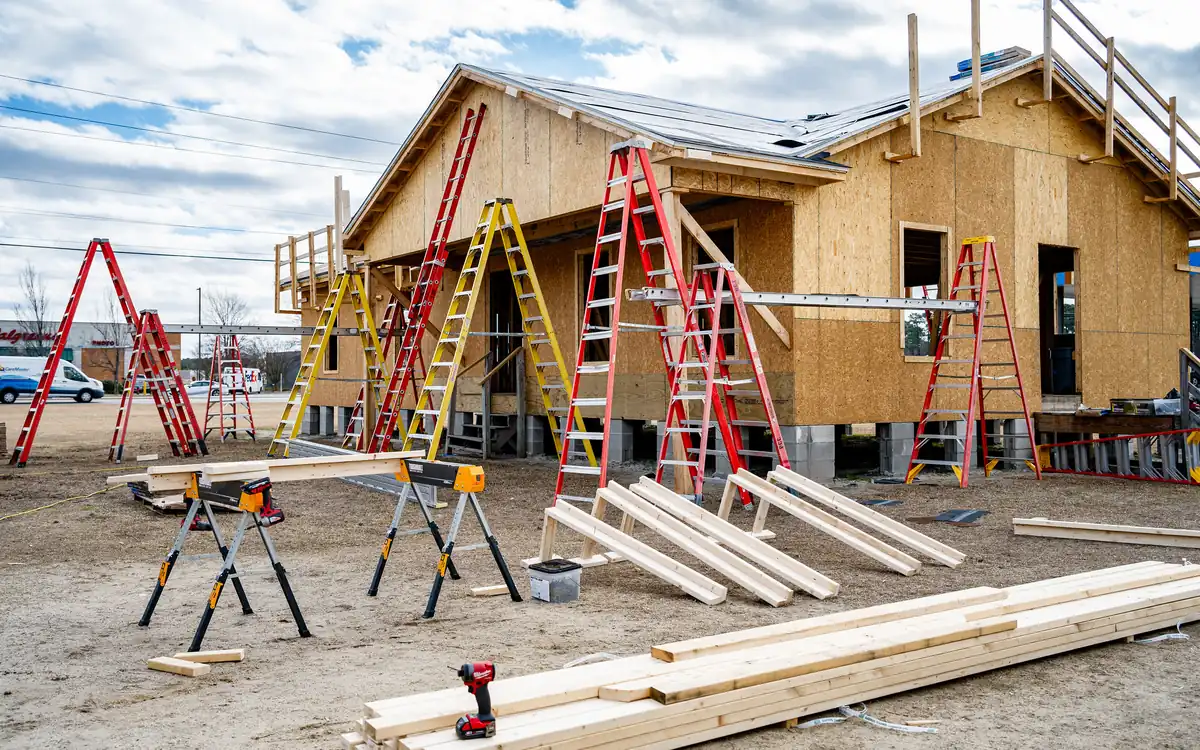
How masonry is measured
Units per square metre of face for brick and block, cubic metres or bags for mortar and grout, and linear metres for anything that runs — ties by density per square metre, weeps and lintels by opening. A perpend joint counted or not counted is the difference between an accurate order and a pallet standing in the way.
Materials & Quantities31
- AAC Block Thin-Bed Mortar Calculator
- Ashlar Stone Masonry Joint Volumetrics Calculator
- Brick Arch Rise-to-Span Ratio Calculator
- Brick Calculator
- Brick Initial Rate of Absorption (IRA) Calculator
- Brick Movement Joint Spacing Calculator
- Brick Veneer Anchor Spacing Calculator
- Brick Veneer Wall Tie Density Calculator
- Cavity Wall Weep Hole Spacing Calculator
- CMU Anchor Embedment Scaling Calculator
- CMU Bond Beam Block Count Calculator
- CMU Cell Grout Volume Calculator
- Concrete CMU Block Counter & Grout Infill Calculator
- Curved Wall Bullnose Corner Bead Segment Calculator
- Firebrick Chimney Liner Thermal Expansion Calculator
- Fireplace Hearth Size Calculator
- Glass Block Panel Expansion Strip & Wire Calculator
- Lime Mortar Mix Calculator (NHL and Lime Putty)
- Manufactured Stone Veneer Corner Unit Calculator
- Manufactured Stone Veneer Mortar Coverage Calculator
- Masonry Bond Beam Rebar Calculator
- Masonry Control Joint Spacing Calculator
- Masonry Grout Mix Calculator — ASTM C476 Fine and Coarse
- Mortar Mix Calculator (ASTM C270 Types M, S, N, O)
- Parapet Coping Cap Linear Footage Calculator
- Radial Arch Brick Wedge Taper Calculator
- Retaining Wall Block Calculator
- Stone Slab Weight Calculator — Worktops, Flags and Panels
- Stone Veneer Weep Screed Linear Footage Calculator
- Surface Bonding Cement and Parge Coat Calculator
- Tuckpointing Mortar Repair Volume Calculator
What gets left off a masonry order
- Cutting waste at openings and returns, which is a fact about the setting-out rather than a flat percentage.
- Grout in hollow blockwork: filling cells or a bond beam is a concrete order sitting inside a masonry one.
- The absorbency of the brick. A high initial rate of absorption changes how much mortar goes in and whether it should be wetted at all.
- Movement joints and the filler, sealant and ties that come with them, which are set by the wall's length and not by its area.
Job takeoffs7
Where bricklayers meet the rest of the job: each runs one of these calculators, with every other trade in the same job beside it.
Worked examples2
A real job estimated step by step, with this trade's steps counted.
Comparisons9
Two ways of doing the same work, weighed against each other.
- AAC Block vs Dense Concrete Block
- Brick vs Stone Veneer
- Masonry Control Joints vs Joint Reinforcement
- Block Retaining Wall vs Poured Concrete
- Block vs Poured Concrete Foundation Wall
- Chimney Liner Expansion vs Clearance to Combustibles
- ICF vs Concrete Block
- Shelf Angles vs Wall Ties
- Stucco vs Adhered Stone Veneer
Planners2
Work this trade out from a space rather than from a job.