
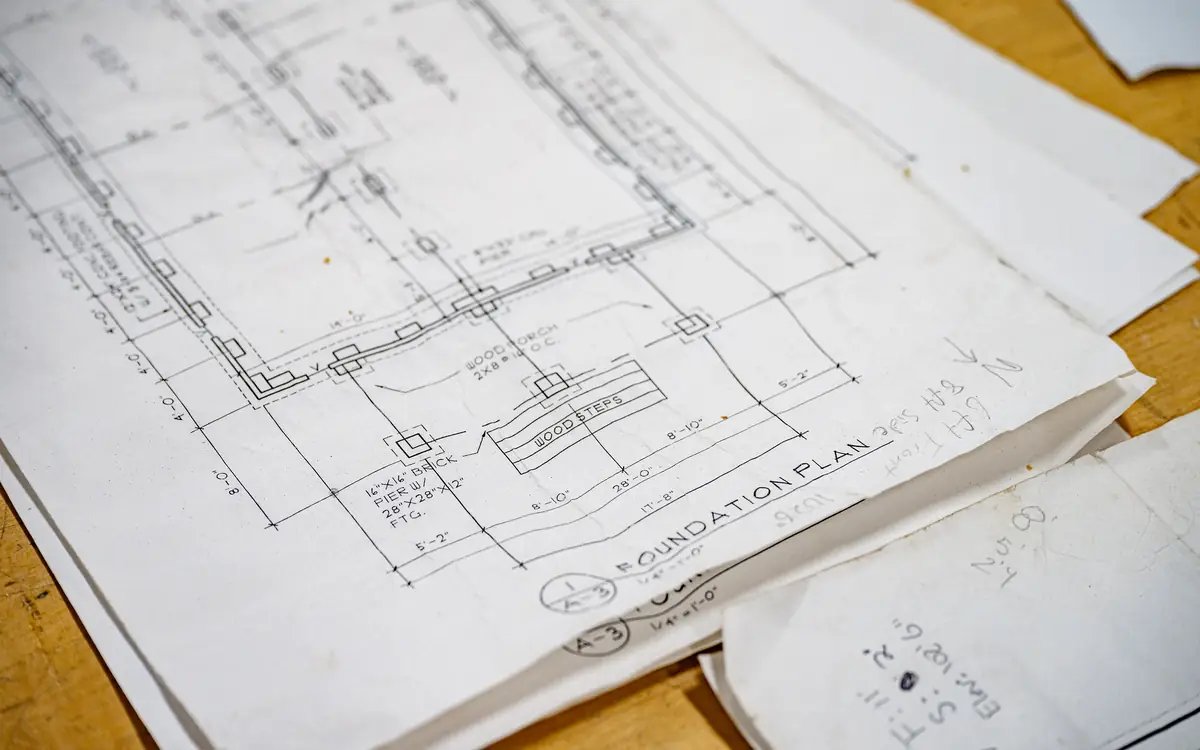
Two accounts of the same twenty-two weeks
The loft has a bed in it. The scaffold came down a fortnight ago, the building control certificate arrived by email on a Friday, and the builder has sent through a final invoice with a covering note that begins pleasantly. Beside it on the table is the client's own tally, kept in a spreadsheet since March, and the two documents disagree by a sum in five figures. Neither person at the table is being dishonest, and neither can currently say which lines account for the gap.
That is the ordinary shape of it. Very few final accounts fail on one large disputed item; most fail on thirty small ones nobody reconciled while they could still be remembered. A provisional sum spent but never omitted. Three daywork sheets signed by a labourer at the end of a wet week. A run of tiling the client bought direct and the builder also carried in a variation. An interim certificate paid in two instalments a month apart, one of them from a different account. Retention deducted at five valuations and released at none. Every one of those is a legitimate entry belonging to somebody; the problem is only that the two documents count them differently.
So this page is the reconciliation rather than the negotiation. How the job got here — what the deposit bought, what each stage payment was tied to, how retention was set up — belongs to the guide on agreeing stage payments, and how any single change should have been authorised and valued belongs to the two variation guides. What follows starts on the last day: six streams of paper, one number, and an order of operations that decides whether the number is still defensible in a year.
The account is an adjustment, never a fresh total
One discipline sits underneath everything else here, and departing from it is what turns a two-evening job into a six-month correspondence. A final account is the contract sum with named adjustments applied to it, each traceable to a specific document, and nothing else. The moment either party opens a blank sheet and starts adding up what the work ought to have cost, the exercise has become a second tender for a building that already exists, and there is no route back to the contract from there.
Order matters as much as content, because several rungs are percentages of the rungs above them. Retention is a percentage of a gross valuation, so it cannot be computed until additions and omissions are settled — which is why a retention figure worked out at practical completion on the pre-variation contract sum is almost always wrong on a job that grew. Tax sits on a net figure and therefore comes last. And a set-off is applied to what is due rather than folded into the valuation of the work, because a deduction hidden inside a measured rate is invisible to everybody, including whoever made it.
So state the account in two blocks that meet only at the end. The first values the work, running from the contract sum to an adjusted contract sum, exclusive of tax and before retention; it is a statement about the building. The second values the payments: what was certified, what actually left the client's bank, what is held, what is being withheld, what tax has been accounted for. Keeping them apart is what lets one side accept the first block while still arguing about the second, which is usually where an agreement turns out to be available.
| Rung | What moves | The error that lives on this rung |
|---|---|---|
| Contract sum as signed | Nothing — it is the fixed starting point, exclusive of tax | Starting instead from the last interim certificate, which already has adjustments baked into it |
| Less every provisional sum, prime cost sum and allowance in it | Down, by the placeholder figures the contract carried | Skipping this rung, so the actual cost is added to a sum that is still sitting in the total |
| Less the value of omitted work | Down, by the credit agreed for what was deleted | Crediting only the material and leaving the labour and the margin inside the sum |
| Plus the measured or agreed value of the work those sums covered | Up, by what the specialist and the measured work actually came to | Inserting an estimate because the specialist's final account has not been received yet |
| Plus the agreed value of additions | Up, one row per instruction from the variation schedule | Two rows for one change: an early quotation and a later revised one, both left in |
| Plus daywork, at prime cost with the contract's percentage additions | Up, by the sheets that survive being tested | Adding sheets for work that is already inside a measured variation on the row above |
| Plus or minus fluctuations and any loss and expense the contract provides for | Either way, only where a provision exists to carry it | Recovering market movement on a contract that contains no fluctuations provision at all |
| = Adjusted contract sum | The gross value of the work, before retention and before tax | Treating this as the amount payable, when three deductions still come off it and the tax still goes on |
| Less sums previously certified, less retention held, less notified set-off | Down, from the payment record rather than from the valuation | Reconciling against the ledger instead of against the bank statements |
| Plus tax, on the net sum that is actually due | Up, at whatever rate the work and the client attract — or not at all where the reverse charge applies | Charging it on the adjusted contract sum rather than on the net figure after certificates, retention and set-off, which taxes money nobody is paying |
Omit the sum, then insert what it actually cost
A provisional sum is a placeholder for work known to be coming and impossible to measure when the contract was priced: the drainage connection nobody had exposed, the making good to the stair after the trimmers went in. At settlement it behaves in a way that is obvious once stated and gets done wrong constantly. The sum is omitted in full and the measured or agreed value of what was actually done is inserted in its place, so only the difference moves the account. A sum carried at four thousand against work that came to five thousand two hundred moves the contract sum by twelve hundred — not by five thousand two hundred, and not by four thousand either. Illustrative figures for the sign convention, nothing more.
Both mirror errors are worth hunting by name before anything else. Insert without omitting and the account overstates by the whole placeholder, which is the version the client's spreadsheet catches. Omit without inserting and it understates by the whole actual value, which is the version that catches the builder, usually on a sum spent early by a subcontractor whose invoice arrived while the roof was going on. The check is mechanical: every provisional and prime cost sum in the contract should appear exactly twice in the account, once as a minus and once as a plus, and one that appears once is wrong whichever way it points.
How much a provisional sum carries with it depends on how well it was described, and the RICS New Rules of Measurement 2 make that a formal distinction rather than a judgement. A defined provisional sum is one where the contractor was given the nature and construction of the work, its place in the building, quantities indicating its scope and any constraint on when it can be done — from which it is taken to have made allowance in its programme and preliminaries. An undefined sum gives none of that, and no such allowance is deemed. The consequence at settlement is that expenditure of an undefined sum can properly carry an adjustment to preliminaries and to the completion date as well as to the measured value, where a defined one ordinarily cannot. That distinction settles a large share of the arguments about time-related cost at the end of a small job.
Prime cost sums adjust the same way and take two further lines with them, and the reason is a definition worth getting right before the arithmetic starts. Under RICS New Rules of Measurement 2 a prime cost sum is money set against materials or goods bought in from a supplier — the ironmongery schedule, the wall tile, the sanitaryware — and it deliberately stops at the goods themselves. Fixing them, the main contractor's profit on them and the attendance they require are each priced as items of their own beside the sum rather than folded inside it. So when the sum gives way to what the supplier actually invoiced, the profit line is recomputed as the same percentage against the new figure, and attendance moves only where what had to be provided for those goods changed. Two adjustments follow one, which is why a prime cost sum settled by swapping a single number is nearly always short.
The American allowance is narrower than either and worth reading exactly, because the boundary is where the argument lands: under Section 3.8 of AIA Document A201 the allowance carries the delivered cost of the materials and equipment themselves, with the taxes on them and trade discounts taken off. Everything that gets the item from the kerb into the building — unloading it, handling it about the site, the labour to fix it, and the overhead and profit riding on that labour — is priced elsewhere, outside the allowance. At settlement the contract sum then moves by the difference between what the item actually cost and the figure allowed for it, plus any justified change to those surrounding costs.
A variation schedule is a list of totals, not a list of jobs
By the end of a job this length there is a folder, an email thread and a builder's memory, and none of the three is a schedule. What the account needs is one table with one row per instruction: a reference, a date, a sentence of description, one agreed figure, a status. The description lets somebody recognise the change in two years; the figure enters the account; the status says whether the row is finished. Quotations, sketches and the email that approved it stay in the folder as the evidence behind the row rather than travelling into the table.
Three statuses cover almost everything, each with one correct handling. Agreed and priced goes straight in. Instructed but never priced is valued now on whichever of the contract's bases actually fits — valued, not guessed, because a guess becomes the number both parties then argue from. Disputed comes out of the total onto its own sheet, quarantining the disagreement to a figure both sides can name instead of contaminating an account that is otherwise settled. Then the fourth category nobody wants: work everybody remembers for which no instruction exists in any form. Not a lost cause, since a reasonable price will be implied where none was agreed — section 51 of the Consumer Rights Act 2015 does that for a consumer contract for services anywhere in the United Kingdom — but a much weaker position than a signed note.
The credit column is the one that goes missing. A change that removes work has to reduce the account, by the value of what was omitted, which is a different figure from the cost of whatever replaced it. Where the contract sets a flat administration charge per change order — many do, because the paperwork on a small change costs what it costs on a large one — that charge belongs on the schedule as its own line rather than smeared into the price of the work, so the count of changes and the value of changes stay separately visible.
- Open the contract document rather than the folder, and give the schedule its first rows: every provisional sum, prime cost sum and allowance in it, with its figure, flagged as a placeholder that adjusts rather than an instruction that adds.
- Number every instruction in date order from the earliest, verbal ones included, and give each a row even where its value is not yet known.
- Write one agreed figure per row, and where none is agreed write the status instead — a number in a cell will be read as agreement by whoever opens the file next.
- Mark each row with the valuation basis it was priced on, because a row on contract rates and a row on daywork are challenged in entirely different ways.
- Cross-check the daywork sheets against this table before either reaches the account, and strike any sheet whose hours sit inside a measured row.
- Total additions and omissions in separate columns, so the gross movement stays visible instead of netting to a small number that hides two large ones.
Rebuild each surviving row to the figure that actually enters the schedule — the direct cost of the added work, the markup the contract sets for varied work, and any flat administration charge per change order — so every row on the table has been assembled the same way rather than transcribed from whichever email happened to quote it.
Your direct material + labor cost for the added scope.
Markup applied to the additional work, same as your normal project markup.
A flat fee covering paperwork, re-scheduling, and coordination overhead.
Total change order cost
$2,400
- Markup amount
- $300
They open the calculator with your figures already in it
Change Order Cost Calculator: 2,400 $ (total change order cost) — shown in imperial, US market. The link sets both, so the result they see is the one on your screen.
What this calculation does not cover
- Markup lands on the added work cost alone — the administrative fee is added after it and is never marked up, so a contract that allows markup on the processing charge will settle slightly above this figure.
- One percentage covers the whole variation, with no split between overhead and profit and no separate rate for subcontracted work; where a sub's price already carries its own uplift, no second tier is stacked on top of it here.
- Time is absent from the arithmetic. Nothing is priced for extra days on site, extended preliminaries, or the disruption to work already sequenced around the original scope, which on a mid-project change is often the larger number.
- The flat fee is counted once per run. Several small variations that each trigger their own charge, or one order bundling unrelated items, have to be worked through individually rather than as a single lump.
- Deductive changes have no route in: the added work cost cannot be taken below zero, so a credit for scope removed has to be handled as its own line away from this page.
- The added work cost is entered as one figure, so nothing distinguishes short-notice material pricing, restocking on cancelled orders, or remedial work to undo what was already built — those belong inside the number you type, or they are missing from the total.
A signed daywork sheet proves hours, not value
The sheets come out near the end, a bundle of them, signed in biro by whoever was on site on a Friday. That signature ordinarily means the people and plant shown were present for the time shown. It does not mean the work should have been valued as daywork at all, that the hours were reasonable, or that the rates attached are the contract's rates. Standard forms treat daywork as the last of the valuation bases, reached only where work cannot properly be valued by measurement, and that ordering is the whole argument at settlement: a sheet is evidence of resource, and whether daywork was the right basis is a separate question still open.
So each sheet is tested rather than totalled. Was the work instructed at all, or is it the contractor's own remedial time? Is it already inside a measured variation, in which case the labour is being recovered twice? Was it contract work that simply took longer than hoped, which is the contractor's risk on a lump sum? Was the plant already on site and standing anyway? A bundle of forty sheets typically loses a handful to those four questions and survives the rest intact — and running the test openly is what makes the survivors defensible.
What a surviving sheet is worth is defined more carefully than most people at a kitchen table realise. The RICS Definition of Prime Cost of Daywork carried out under a Building Contract builds the labour rate not from an hourly wage but from the annual cost of employing an operative divided by the hours actually available for productive work in a year, which pulls employer's contributions, holiday and public holiday pay, insurance and non-productive time into the prime cost itself. Materials go in at invoice cost less trade discounts, plant at the rates in the schedule. On top of those three, and only on top, sit percentage additions for incidental costs, overheads and profit — stated separately for labour, materials and plant, because they are not the same number.
That is where the expensive quiet error lives. A labour prime cost built to the definition already contains the employer's on-costs, so adding a general overhead percentage to a rate that was actually quoted as a charge-out rate counts the same money twice. Establish which kind of number the sheets are priced at before any percentage goes near them, and if nobody knows, that is a question for the contract's daywork provision rather than for the table.
| Component | Inside prime cost | Recovered by the percentage addition |
|---|---|---|
| Operative's wages, employer's contributions, holiday and insurance | Yes — built into an hourly figure from the annual cost of employment divided by productive hours | No, and adding an overhead percentage to a rate that already contains them is a double count |
| Non-productive time, travel and tool allowances where they apply | Yes — the definition works from hours actually available for productive work | No |
| Supervision above the working charge hand | No | Yes — site supervision is one of the things the addition is there to carry |
| Materials | Invoice cost less trade discounts, delivered to site | A separate percentage from the labour one, stated in its own right |
| Plant and hired equipment | At the rates in the schedule the contract adopts | A third percentage, again stated separately rather than assumed equal to the others |
| Head office overhead and profit | No | Yes — this is the substance of what the additions are for |
Price the surviving daywork the way the definition builds it: material at invoice cost and labour at its prime cost, then the contract's percentage on top of that subtotal. Change the markup figure and watch what happens to the total, because the argument at the table is almost never about the hours — it is about which costs were already inside the number the percentage is being applied to.
Your direct cost for materials on this job.
Your direct labor cost for this job (wages, not billed rate).
The percentage added on top of costs to cover overhead and profit.
Total price to charge
$9,600
- Cost subtotal
- $8,000
- Markup amount
- $1,600
- Gross margin on the price
- 16.67 %
They open the calculator with your figures already in it
Contractor Markup Calculator: 9,600 $ (total price to charge) — shown in imperial, US market. The link sets both, so the result they see is the one on your screen.
What this calculation does not cover
- Only two cost lines feed the subtotal — materials and labor. Permits, equipment and tool rental, dumpster and disposal fees, subcontractor invoices, insurance, fuel and supervision are not inputs, so anything you have not already buried inside those two figures is neither marked up nor billed.
- Materials and labor are marked up at one identical rate, because the percentage is applied once to their combined subtotal. If you price material at one percentage and labor at another — a common split — price the two separately and add the results, since a single blended figure here will not reproduce that.
- The markup amount in the breakdown is gross, not profit: it is the one figure that has to carry overhead and profit together, and there is no overhead input to separate them. Office costs, vehicles, estimating time and idle days come out of that same amount before anything is left over.
- The gross margin row is the same money expressed against the price instead of against the cost, and it is always the smaller percentage of the two — a 20 per cent markup is a 16.7 per cent margin. It is shown because the two are routinely used interchangeably and are not equal; it is still gross, so overhead has not been taken out of it, and it is not a net profit figure.
- Nothing is added after the markup — the total is exactly the subtotal multiplied by one plus your percentage. Sales tax, VAT or GST, permit fees passed through to the client, and card or financing charges all sit outside it, so the number is a price to quote rather than a finished invoice.
- The costs you enter are treated as final and already known. There is no waste allowance and no contingency term, so if supplier prices move between quote and purchase or the hours run long, the overrun comes out of the markup instead of being added to the price.
- Each cost line accepts up to 500,000 and the markup up to 200 per cent, which caps how large a single job this will price without splitting it. The currency is a label only: the answer comes back in whatever currency you typed the costs in, with no conversion and no rounding to a tidy quotable figure.
What was certified is not what was banked
The payment block is the half people expect to be easy. Start it from the bank rather than the ledger: every payment that actually left the client's account, with its date and the certificate or invoice it was against. Reconciling to a ledger reproduces whatever mistake the ledger already holds, and on a small job the ledger is a folder of PDFs. Two mismatches show up almost every time — an interim payment made in two instalments and recorded once, and a payment from a second account, often a card, that never reached the spreadsheet at all.
Then the items that are payments in substance without looking like payments: money the client paid a merchant or specialist direct, materials the client bought and handed over, which the trade calls free issue, and statutory fees paid by whichever party actually paid them. Each must appear exactly once, and which side it appears on matters enormously — either the corresponding work comes out of the contract sum as an omission, or the money goes in as a payment on account. Doing both is the commonest way a client concludes the builder has overcharged by a large round number; doing neither is how a builder ends up funding somebody's tile order.
Credit notes and returns belong here too — materials over-ordered and taken back, plant hired for four weeks and returned in three, a rooflight replaced free after arriving damaged. Anything that generated a credit against a supplier account has to reach the final account if the original cost did. On a cost-reimbursable line that is the difference between a fair figure and a fictional one; on a lump sum row it usually moves nothing, and knowing which you are looking at saves an hour.
Tax is where certified and banked most reliably diverge, and the gap is arithmetic rather than a discrepancy. Where the payer is a contractor within the Construction Industry Scheme, a deduction comes off the labour element of a payment to a subcontractor and goes to HMRC under the rules in HMRC's CIS340 guide; the subcontractor's account correctly shows gross while the bank shows net. VAT is its own question rather than a percentage to be assumed — which rate applies to a given piece of building work in the United Kingdom is governed by HMRC VAT Notice 708, Buildings and construction, where the zero-rated and reduced-rated categories are defined, and no domestic final account should carry a rate that has not been checked against it. Between VAT-registered businesses inside the CIS the domestic reverse charge in VAT Notice 735 changes who accounts for the tax, and it does not apply where the customer is an end user — which is exactly what a homeowner is.
One tax point catches both parties on the last invoice: VAT on a retention follows the release of that retention rather than the certificate that first held it. The retained money and the tax on it move together, months after the work was valued, so an account charging tax on the full gross figure at practical completion has moved it early.
Retention is released in two halves and one of them goes missing
The usual mechanism holds a percentage of each interim valuation, halves the amount held at practical completion, and releases the balance at the end of the rectification period against a certificate confirming the defects have been made good. Two numbers govern it and both have to be read off the contract rather than assumed: the percentage, and the limit — the ceiling beyond which no further retention accrues however large the account grows. NEC4 does not hold retention at all unless the parties have adopted secondary Option X16, which is a live trap for anyone who has arrived at that form from a JCT background and expects a deduction to be waiting there.
Two things go wrong reliably. The first is a release computed at practical completion against the original contract sum on a job whose account grew by a fifth: retention accrues on varied work at the same percentage, so the halving has to be done on the final adjusted figure rather than the signed one. The second is that nobody diarises the second release — the rectification period runs out quietly, the certificate that would trigger the balance is never issued because no one asks, and a real debt becomes a write-off on one side and a windfall on the other. Put both dates in a calendar at practical completion, name who issues the certificate, and state in the account what remains held and when it falls due. A final account that ends without saying where the retention is has not finished.
A set-off is a statement, not a subtraction
There will be things the client wants to take off: a completion date that slipped, a floor laid over an unlevel screed, a section of render another trade has since redone. Any of those may be a perfectly good claim, and taking it off by simply paying less is how a good claim becomes a bad one. State the deduction — what is being withheld, why, how the amount was arrived at, against which item — because an unexplained short payment gives the other side nothing to answer and turns a specific disagreement into a general one.
Two mechanisms carry their own procedure and are routinely short-circuited. Liquidated damages are usually conditional on the contract's steps being taken in order: any extension of time assessed first, the non-completion position certified or notified as required, and a written notice of intention to deduct served before the money is withheld. Skip a step and the deduction is frequently ineffective even where the delay was real. Defects are the other: most contracts give the contractor a right to return and remedy within the rectification period, and a client who engages somebody else first and presents the invoice afterwards has converted a free repair into a contested cost. On a commercial contract in the United Kingdom a further layer applies — the payment notice and pay less notice regime with statutory deadlines under Part II of the Housing Grants, Construction and Regeneration Act 1996 — and that machinery is covered in full by the guide on applying for payment, which is the commercial job where it actually bites; why a residential occupier sits outside it belongs to the guide on agreeing stage payments instead.
Where a third party administers the contract, the same discipline appears in the standard forms as a power to withhold with reasons. AIA Document A201 lets the architect withhold certification, or nullify a certificate already issued, on listed grounds: defective work not remedied, third-party claims, reasonable evidence that the work cannot be completed for the unpaid balance, damage to another contractor, persistent failure to carry out the work in accordance with the contract. What makes the provision work is not the power but the requirement to name the ground relied on, and that is the habit worth borrowing on a job with no architect on it.
What signing it closes
A final account is not merely the last invoice. In most contractual systems agreeing it extinguishes claims on both sides, and more completely than either party expects while they are still arguing about a tiling row. Under the JCT forms the Final Certificate is conclusive evidence about specified matters — the adjustment of the contract sum among them, and the quality of materials or standards of workmanship expressly stated to be for the architect's approval — unless proceedings are commenced within the period the contract states. That period is short, it runs from the certificate, and it does not wait for anybody to notice.
The American mechanism is a set of documents rather than a certificate, and the documents are the point. Section 9.10 of AIA Document A201 makes the owner's final payment a waiver of claims but for those reserved, and the contractor's acceptance of it a waiver of every claim except those already identified in writing as unsettled at the time of the final application. The paperwork is standardised: an affidavit of payment of debts and claims on AIA Document G706, an affidavit of release of liens on G706A, the surety's consent on G707. In the lien states the release is statutory too, California's unconditional waiver and release on final payment at Civil Code section 8138 being the clearest drafted example. The international forms run the same idea as a sequence — FIDIC's Clause 14 moves from a statement at completion through a final statement and a written discharge to the final payment certificate, after which the employer's liability is at an end save for what was reserved, and NEC4 reaches it through a project manager's final assessment after the defects certificate, conclusive unless challenged in time.
Behind all of it sits the outer limit, longer than people assume and shorter than they hope. In England and Wales an action on a simple contract must be brought within six years under section 5 of the Limitation Act 1980, and within twelve where the contract was executed as a deed, under section 8. Those periods take no interest in whether the account was settled well; they run from when the cause of action accrued. Which reduces this whole section to one instruction: before signing, ask what the document is being conclusive about, and reserve anything unresolved in writing on the face of it rather than in the covering email.
| Mechanism | What it makes conclusive | What ordinarily survives |
|---|---|---|
| JCT Final Certificate | The adjustment of the contract sum, and quality expressly stated to be for the architect's approval | Anything raised in proceedings started within the period the contract states, and matters outside the listed heads |
| AIA A201, Section 9.10, owner's final payment | The owner's claims generally | Liens and unsettled claims, work that fails to comply with the requirements of the contract documents, and the terms of any special warranties the contract required |
| AIA A201, Section 9.10, contractor's acceptance of final payment | The contractor's claims generally | Only claims identified in writing as unsettled at the time of the final application |
| FIDIC Clause 14, discharge and final payment certificate | The employer's liability, once the sequence to the final payment certificate is complete | Whatever the contractor expressly reserved in the discharge and the final statement |
| California Civil Code section 8138, unconditional waiver on final payment | Lien, stop payment notice and bond rights, on payment | Nothing on the statutory form itself — reservations have to be made before it is signed |
| Limitation Act 1980, sections 5 and 8 | Nothing — it is a long stop rather than an agreement | Any claim brought inside six years, or twelve where the contract was a deed |
When the two numbers will not meet
The first move at deadlock is arithmetic rather than argument: split the schedule into agreed and not agreed, total each, and pay the agreed part. Withholding an agreed sum as leverage over a disputed one turns one dispute into two and hands the other side a complaint that is easy to state and hard to answer. It also changes the shape of the disagreement — a builder and a client eleven thousand apart all afternoon often find, once the agreed rows come out, that they are two thousand apart across four lines, which is a different conversation.
The second move is an independent reading of the whole. Neither party's total is a neutral document by this point, so build a third from the outside: what the job as actually built, with the changes that actually happened, ought to have cost. It settles nothing by itself and should not be offered as though it could. What it tells you is whether the disagreement is a handful of lines inside a sensible envelope or whether one of the two totals is the wrong size altogether, and those call for completely different responses.
If it still will not close, the forum depends on what was agreed at the start and on who the parties are. Adjudication is available as of right on a commercial contract and on a domestic one only where the parties wrote it in; mediation is open to anybody and settles a high proportion of accounts this size, because the dispute is usually about being heard as much as about money; the small claims track sits below a threshold that varies by jurisdiction and is worth checking rather than assuming. Whichever route is taken, the schedule built above is the document that travels with you — numbered rows, each with a value, a status and the paper behind it. A folder of emails and a clear memory of what was said in the garden in April are not the same thing, and only one of them is worth anything on the day.
Build that third number here, as the job actually turned out rather than as it was planned: materials as bought, labour as worked, fees as paid, and the contingency percentage set to zero, because at a final account the contingency has either been spent — in which case it is already inside the lines above — or it was never needed. Compare the result with both totals on the table before deciding whose arithmetic to interrogate first.
Total cost of all materials for the project.
Total cost of hired labor, if any.
Building permits, inspection fees, and similar required costs.
Extra buffer for unexpected costs — nearly every renovation finds at least one surprise.
Total project budget
$10,695
- Materials
- $5,000
- Labor
- $4,000
- Permits & fees
- $300
- Subtotal
- $9,300
- Contingency buffer
- $1,395
They open the calculator with your figures already in it
Renovation Budget Calculator: 10,695 USD — shown in imperial, US market. The link sets both, so the result they see is the one on your screen.
What this calculation does not cover
- Sales tax, delivery charges, tool and equipment rental, dumpster and disposal fees, and temporary storage or lodging have no field of their own — the subtotal is exactly materials plus labor plus permits, so anything else reaches the total only if you fold it into one of those three figures yourself.
- The buffer multiplies the combined subtotal, so a fixed-price cabinet order, an open-ended demolition line and a published permit fee are all padded at the same percentage; there is no way to carry a heavier margin on just the part of the job that holds the unknowns.
- If the labor figure is your own hours-times-rate estimate rather than a contractor's quote, a general contractor's overhead and profit on materials and subcontracted trades appears nowhere in the sum, which adds only the three amounts entered.
- Every set of entries returns the same high confidence, including a 0% buffer at the bottom of the allowed range or the 50% at the top, because nothing in the arithmetic examines whether the percentage chosen suits the work being priced.
- Each amount is treated as a price known today: no duration, phasing or draw schedule enters the calculation, so a project whose material prices move between quote and purchase, or whose costs straddle two budget years, is totalled as though it all happened at once.
The papers this figure has to be assembled from
Six documents to have on the table before either party writes a total, gathered while the job is fresh enough that somebody can still say what a signature on a Friday meant.
- The contract document, read for its placeholders rather than its total — Every provisional sum, prime cost sum and allowance in it, listed with its figure. That list is the spine of the omit-then-insert arithmetic, and each entry has to appear twice in the account — once as a minus, once as a plus.
- One numbered row per instruction, with a status against each — Agreed and priced, instructed but never valued, or disputed. Disputed rows come out of the total onto their own sheet so a disagreement over four lines cannot hold up an account that is otherwise settled.
- The daywork bundle, tested before it is totalled — A signature evidences hours on site, not that daywork was the right basis. Strike any sheet whose labour is already inside a measured variation, and establish whether the rate is prime cost or a charge-out rate before any percentage goes on it.
- Bank statements, not the payment ledger — Every payment that actually left the account, with its date. Split instalments and payments from a second card are the two entries a ledger reliably misses, and the ledger reproduces whatever error it already contains.
- Direct purchases and free-issue materials, on one side of the account only — Money the client paid a merchant or specialist direct is either an omission from the contract sum or a payment on account. Counting it as both is the commonest reason a client believes they have been overcharged.
- The retention position, with both release dates diarised — Half at practical completion computed on the adjusted sum rather than the signed one, the balance at the end of the rectification period against a certificate somebody has been named to issue.
Opens the calculators above on one screen with the dimensions from this article already filled in. Quantities only — this site publishes no price list, because local prices vary too much to publish honestly.