
SettingsSettings for this calculationUS
The total height of fill to be placed.
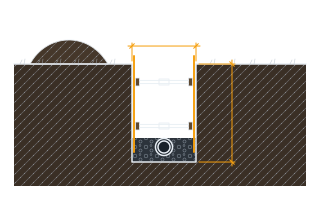
From the top of the formation or the structure's base to finished level — the fill only, not the excavation depth, which includes whatever was there before. Where the fill goes over a pipe or a structure, the first lifts above it are usually thinner and hand-compacted, so work that zone separately: counting the whole height at the general lift thickness under-counts the lifts and the time.
The maximum loose lift thickness for your compaction equipment and material.
6-8 in (0.15-0.2m) is typical for hand-operated plate compactors; heavier equipment can handle thicker lifts, but always follow your project specification.
Number of lifts needed
16 lifts
They open the calculator with your figures already in it
Backfill Compaction Lift Count Calculator: 16 lifts — shown in imperial, US market. The link sets both, so the result they see is the one on your screen.
Show calculation logicHide calculation logic
How this was calculated
Formula source(s)
- Structural fill is placed and compacted in controlled lift thicknesses to achieve uniform density throughout the fill depth; number of lifts = ceiling(total fill height / lift thickness)
Inputs used
- Total Fill Height
- 10 ft
- Compaction Lift Thickness
- 7.75 in
What this calculation does not cover
- Lift thickness and fill height have to be measured the same way. This page takes the loose thickness the plant can place in one pass, so where a specification instead states a maximum compacted lift, the finished height gained per lift is less than the figure entered and the true count is higher than the number shown.
- A lift is one layer of material, and it is not brought to density by a single pass of the roller. Reaching the specified density normally takes several passes over each lift at a set overlap and travel speed, so plant hours come from lifts multiplied by passes, and this page asks for neither.
- The count assumes every lift is the same thickness across the whole plan area. It does not cover the thinner first lift often required over a soft or yielding subgrade, the bedding and haunching zone around a pipe where lift thickness is reduced and compaction is done by hand, or the depth of cover that must be built up before heavy plant is allowed to track over a buried service.
- Placing the right number of lifts is not the same as passing compaction testing. Density is checked lift by lift against a laboratory Proctor value, and a lift that fails has to be scarified, moisture-conditioned and recompacted no matter how thin it was placed, with moisture content away from optimum the usual reason a correctly sized lift will not reach density.
- This is a count of layers and nothing else. It produces no volume, tonnage or delivery quantity for the fill, and the loose material ordered exceeds the compacted volume in the void by the material's bulking, which is a separate calculation.
Computed in your browser — nothing you enter is uploaded. Presented in US customary units and US trade terminology. Where a formula follows a published standard, that standard and its edition are cited beside it on this page; where none governs, the page says so. Local amendments override model codes — verify against the code in force where you build.
Sources checked 2026-09-02 · in the site-wide review of 2026-09-06 · v1.0.1
Regulatory standards & verification citations1
- Structural fill is placed and compacted in controlled lift thicknesses to achieve uniform density throughout the fill depth; number of lifts = ceiling(total fill height / lift thickness)
Cite this page
Your workspace
Most jobs need more than one number. Add the calculators you need next and they open right here, underneath this one — your figures stay on screen and nothing is lost to a page change.