
SettingsSettings for this calculationUS
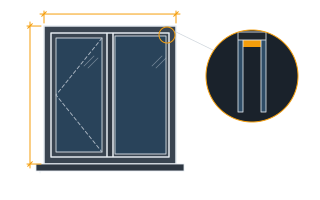
The area of the glass panel to be lifted.
Measure the panel's width times height.
The nominal thickness of the glass panel.
Nominal is a designation, not a measurement: float glass is supplied to a tolerance and the named figure is what it is called rather than what it is. For a laminated panel, count every ply and every interlayer — a lift plan built on one ply is short by more than half, and it is the plan that decides how many people and what equipment are needed. Where the panel is an insulated unit, both lites are being lifted.
The density of the glass, typically about 2500 kg/m³ (156 pcf) for standard soda-lime glass.
Leave this alone in almost every case. Soda-lime glass barely varies: low-iron, toughened, heat-strengthened and coated glass are all effectively the same material by weight, and changing this figure to account for any of them is fixing the wrong term. What does change the answer is the MAKE-UP — a laminated build-up or an insulated unit is not one slab, and it is the thickness and the number of plies that carry that, not the density.
The maximum weight considered safe for manual lifting given the crew and technique planned.
Increase this for a two- or three-person lift; keep it conservative for a single installer.
Glass panel weight
52.5 lb
This panel weighs is above the safe manual lift threshold shown with it — you entered it from your own manual handling assessment. This needs checking by a qualified person before you proceed. This is arithmetic against the figure you entered, not a lift plan. The appointed person and the manufacturer's chart decide whether and how the lift proceeds.
- Safe lift threshold
- 50 lb
They open the calculator with your figures already in it
Glass Panel Lift Safety Weight Checker: 52.5 lb — shown in imperial, US market. The link sets both, so the result they see is the one on your screen.
Show calculation logicHide calculation logic
How this was calculated
Formula source(s)
- Panel weight = area × thickness × glass density (2500 kg/m³); compared against a safe manual lifting threshold appropriate for the number of installers, since manual glass handling weight limits are a common jobsite safety practice to prevent back injury and dropped-glass incidents
Inputs used
- Glass Panel Area
- 16.15 sq ft
- Glass Thickness
- 0.25 in
- Glass Density
- 156.07 pcf
- Safe Manual Lift Threshold
- 50 lb
Intermediate steps
- Safe lift threshold
- 50 lb
Confidence note: This panel weighs is above the safe manual lift threshold shown with it — you entered it from your own manual handling assessment. This needs checking by a qualified person before you proceed. This is arithmetic against the figure you entered, not a lift plan. The appointed person and the manufacturer's chart decide whether and how the lift proceeds.
What this calculation does not cover
- Weight is not the only thing that makes a lift unsafe. A panel's size decides whether it can be gripped at all and whether it must be carried at arm's length: The same weight in a 600 mm (2 ft) square is a different lift from that weight in a 3 m (10 ft) length, and this compares only the mass.
- The default density is soda-lime float glass at 2,500 kg/m³ (156 pcf). A laminated build-up includes an interlayer that weighs less per unit of thickness than glass, so entering the full laminated thickness at glass density over-states the weight.
- Nothing about the lifting method. No suction-cup rating, no allowance for wind on a panel being carried outdoors, no account of surface condition — a panel inside the threshold can still be dropped.
- The threshold is your own number. This site does not know the safe manual handling limit for a given person, posture, grip or jurisdiction, and does not supply one.
Computed in your browser — nothing you enter is uploaded. Presented in US customary units and US trade terminology. Where a formula follows a published standard, that standard and its edition are cited beside it on this page; where none governs, the page says so. Local amendments override model codes — verify against the code in force where you build.
Sources checked 2026-08-27 · in the site-wide review of 2026-09-06 · v1.1.0
Regulatory standards & verification citations1
- Panel weight = area × thickness × glass density (2500 kg/m³); compared against a safe manual lifting threshold appropriate for the number of installers, since manual glass handling weight limits are a common jobsite safety practice to prevent back injury and dropped-glass incidents
Cite this page
Your workspace
Most jobs need more than one number. Add the calculators you need next and they open right here, underneath this one — your figures stay on screen and nothing is lost to a page change.