
SettingsSettings for this calculationUS
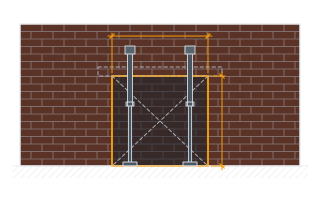
The intact, in-place volume of the masonry or concrete before demolition.
Measure or calculate the solid volume of the structure as it stands (e.g. wall length x height x thickness) before any breaking or demolition occurs.
The type of masonry/concrete being demolished — different materials bulk by different amounts.
Typical demolition-estimating swell factors: concrete ~1.3x, CMU block ~1.4x, brick masonry ~1.5x, natural stone ~1.5x. These are industry estimating conventions, not a single universal engineering constant.
Estimated bulked (swelled) volume
26 yd³
These are typical demolition-estimating swell factors, not a universal engineering constant — actual bulking varies with the demolition method (mechanical breaking vs. explosive vs. hand demolition) and resulting debris piece size. Use a higher factor for finely broken debris and confirm against your hauler/estimator's experience on similar material.
- Swell factor used
- 1.3 x
They open the calculator with your figures already in it
Demolition Bulk Volume Swell Calculator: 26 yd³ — shown in imperial, US market. The link sets both, so the result they see is the one on your screen.
Show calculation logicHide calculation logic
How this was calculated
Formula source(s)
- Bulked volume = In-place volume × Swell (bulking) Factor. Broken masonry and concrete occupy significantly more volume once demolished due to voids created by fracturing — typical swell factors commonly used in demolition estimating: concrete ~1.3x, CMU block ~1.4x, brick masonry ~1.5x, natural stone ~1.5x. These are industry estimating conventions (mirroring the same swell/bulking concept used in this site's Soil Swell & Shrinkage calculator), not a single universal engineering constant — actual swell varies with demolition method and debris size.
Inputs used
- In-Place (Pre-Demolition) Volume
- 20 yd³
- Demolished Material Type
- Concrete (~1.3x)
Intermediate steps
- Swell factor used
- 1.3 x
Confidence note: These are typical demolition-estimating swell factors, not a universal engineering constant — actual bulking varies with the demolition method (mechanical breaking vs. explosive vs. hand demolition) and resulting debris piece size. Use a higher factor for finely broken debris and confirm against your hauler/estimator's experience on similar material.
What this calculation does not cover
- The in-place volume from a length x height x thickness take-off is the structure alone, and the container receives everything attached to it. Plaster and render, screed, cavity insulation, timber lintels and bearers built into masonry, tile and its bedding — none of that contributed to the solid volume entered, all of it leaves in the same load, and on a finished internal wall it is a substantial share of what goes out.
- The swell factors are for material that breaks into loose pieces, and reinforced concrete does not. The bar holds broken slabs together, so the debris stands in tangled sections occupying far more space than 1.3 times its solid volume until the reinforcement is cut out. A reinforced slab, a ring beam or an RC frame needs the bar handled as its own operation, and the volume on the ground before that happens bears no relation to this figure.
Estimated cost — your price
This site holds no price list for this material — local prices vary too much to publish honestly. Enter your supplier's price and the result is costed with it.
Part of a bigger job
This trade is one line of a job takeoff. Run the whole job and every other trade comes back with it, off the same measurements.
also measures10 other trades
Computed in your browser — nothing you enter is uploaded. Presented in US customary units and US trade terminology. Where a formula follows a published standard, that standard and its edition are cited beside it on this page; where none governs, the page says so. Local amendments override model codes — verify against the code in force where you build.
Sources checked 2026-09-06 · in the site-wide review of 2026-09-06 · v1.1.1
Regulatory standards & verification citations1
- Bulked volume = In-place volume × Swell (bulking) Factor. Broken masonry and concrete occupy significantly more volume once demolished due to voids created by fracturing — typical swell factors commonly used in demolition estimating: concrete ~1.3x, CMU block ~1.4x, brick masonry ~1.5x, natural stone ~1.5x. These are industry estimating conventions (mirroring the same swell/bulking concept used in this site's Soil Swell & Shrinkage calculator), not a single universal engineering constant — actual swell varies with demolition method and debris size.
Cite this page
Your workspace
Most jobs need more than one number. Add the calculators you need next and they open right here, underneath this one — your figures stay on screen and nothing is lost to a page change.
Tools and safety for this job
To segregate and remove waste. Generic types, no brands, no prices.
Protection this work requires
- Boards, blocks and bagged material cause most lasting back injuries on small sites: two people or a lifter for full sheets, and never a bag on one shoulder up a ladder.
- Knives cause more site injuries than any power tool: cut away from your body, change blades often, and wear cut-resistant gloves to EN 388 level C for repeated cutting.
Show the 2 tools this job needsHide tools
Essential
Shovel and spade
Wheelbarrow
what each site-management tool is for, and the spec that decides which to buy where one does.