
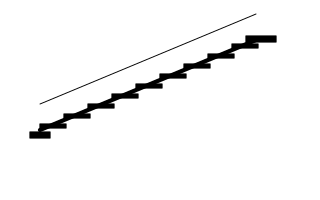
The job
Modelled, not recorded. Every figure here is the answer the Steel Stair Calculator (Stringer Cut List, Tread Plates and Weight) gives for these inputs, written down in both unit systems and re-run whenever the site is built. No job was carried out, so there is no measured overrun on this page.
The rise is 9 ft (2.74 m) from the shop floor to a mezzanine deck, and the stair is shop-fabricated: two channels for stringers, a checker plate tread at every step on angle brackets, bolted together on site. The flight is 3.5 ft (1.07 m) over the stringers.
The channels are the ones on the engineer's drawing, picked from the list on the page; the calculator cuts and weighs them and never checks that they span or that the connections hold. Each stringer gets 4 in (101.6 mm) at both ends for its connection.
The riser count is the stair rise and run page's for the same rise and target, so the code readout on this page reads the same steps.
Open this job in the calculator
Embed this calculator on your own page
Every figure is worked again by the real calculators, in both unit systems; nothing is priced and nothing is saved until you press Use as my project.
The inputs, exactly as entered
| Input | Value | Why |
|---|---|---|
| Floor-to-floor rise | 9 ft (2.74 m) | Shop floor to the mezzanine's finished deck. |
| Riser to aim for | 7 in (17.78 cm) | Inside the IRC's maximum riser. |
| Going | 10.5 in (26.67 cm) | Front of one tread to the front of the next on plan. |
| Width over the stringers | 3.5 ft (1.07 m) | Outside to outside of the two channels. |
| Stringer section | C10 × 15.3 (15.3 lb/ft) | The channel on the engineer's drawing. |
| Stringers | 2 | One each side. |
| Allowance at each end | 4 in (101.6 mm) | The fabricator's allowance at the head and the foot for the connection plates. |
| Treads | Checker plate | Checker plate, weighed here; the variant uses grating. |
| Plate thickness | 0.25 in (6.35 mm) | The plate on the drawing. |
| Tread overhang | 1 in (25.4 mm) | Each tread runs a little past the one below. |
| Stock length of the section | 20 ft (6.1 m) | Channel as the mill sells it. |
| Allowance on the weight | 5 | Offcuts and cleats. |
| Code for the readout | US — IRC 2024 | A US building, so the readout uses the IRC. |
The working, step by step
1. Risers
15 risers
The rise into the whole number of risers nearest the target: 15 risers of 7.2 in (182.9 mm), with 14 treads plates. The pitch is 34.44 °.
2. Stringer cut length, each
15.87 ft (4.84 m)
Each stringer runs along the flight's slope and carries the connection allowance at both ends: 15.87 ft (4.84 m). The two come from 2 lengths of mill stock and weigh 485.5 lb (220.2 kg).
3. Tread length between the stringers
3.07 ft (0.93 m)
The treads span between the channels' webs, clear of their flanges: 3.07 ft (0.93 m) each, by the going plus the overhang. Their plates weigh 420.1 lb (190.5 kg) together.
4. Brackets
28 angles
Two angle brackets carry each tread, 28 angles in all, each as long as the going: 62.07 lb (28.15 kg). Each bracket takes two bolts into the stringer and two into the tread, 112 bolts bolts.
5. Steel as cut
967.7 lb (438.9 kg)
The stringers, plates and brackets together are 967.7 lb (438.9 kg) of bare steel as cut, before any galvanising or paint; the allowance for offcuts and the cleats a fabricator adds then gives the headline.
Steel in the flight, with the allowance
1,016 lb
461 kg
The headline is the steel to buy, 1,016 lb, bare and before galvanising. It is the figure a fabricator works a price from and a crew plans a lift by, and it is set mostly by the stringers and the plates: the brackets are a small share.
What to buy
| Quantity | Figure | What it is for |
|---|---|---|
| Steel in the flight, with the allowance | 1,016 lb (461 kg) | Bare steel to buy for the flight, with the allowance, before galvanising. |
| Stock lengths for the stringers | 2 lengths | Mill lengths of the channel, each holding one stringer whole. |
| Steel in the tread plates | 420.1 lb (190.5 kg) | Checker plate by weight, cut to the tread size. |
| Bolts | 112 bolts | Two into the stringer and two into the tread at every bracket. |
The allowance, and what it does here
The 5 per cent allowance goes on the weight, for offcuts and the cleats a fabricator adds. The counts are as cut: each stringer is one length, each tread one plate.
The common mistake
Ordering the stringers at the slope length
The slope of the flight is the line from the foot to the head, and a stringer is longer by its connections at both ends. Ordered at the slope, a channel arrives too short to bolt to its plates, and a stringer cannot be lengthened once it is cut: it is a new length of steel and a new delivery. Carry the allowance into the cut list before the steel is ordered, and check it against the connection detail on the drawing.
Change the job, and see what moves
The same flight, with grating treads
Treads: Grating treads → 575 lb (261 kg)
Use grating treads instead of plate and the weighed steel drops to 575 lb: the gratings come from their maker by the piece, with their own weight.
The same flight, on deeper channels
Stringer section: C12 × 20.7 (20.7 lb/ft) → 1,188 lb (539 kg)
Go up to the deeper channel and the flight weighs 1,188 lb, the stringers alone 656.9 lb; the treads are a little shorter between its wider flanges.
What to run next
- Structural Steel Stair Stringer Length Calculator
A stringer's length alone, from the rise and the run.
- Steel Stair Stringer Bolt Hole Spacing Calculator
The bolt holes along each stringer for the tread brackets.
- Steel Plate Mass Calculator
Any other plate in the job by its size and thickness.
Sources
The method and every constant behind these figures belong to the Steel Stair Calculator (Stringer Cut List, Tread Plates and Weight), version 1.0.1, last verified 2026-10-31. It rests on:
- A stringer along the flight's slope, sqrt(rise² + run²), the steel stair stringer length page's geometry, plus the connection allowance at each end
- Section masses: parallel flange channels to BS EN 10365 as the UK steel makers' section tables print them (PFC 180 x 75 20.3 kg/m, 200 x 75 23.4, 230 x 75 25.7, 260 x 75 27.6); American Standard channels C8 x 11.5, C10 x 15.3 and C12 x 20.7, whose designation gives the weight in lb/ft (AISC Shapes Database); flats and plates at 7850 kg/m³; equal angle L50 x 50 x 5 at 3.77 kg/m (BS EN 10056-1)
- US: IRC 2024 R311.7.5; UK: Approved Document K Table 1.1; Australia: NCC Housing Provisions Table 11.2.2a; Canada: NBC 2020 Tables 9.8.4.1 and 9.8.4.2, as the stair rise and run page checks them
Frequently asked questions
- How much does a steel stair rising 9 ft weigh?
- On two channels with checker plate treads, 967.7 lb as cut, or 1,016 lb with the allowance: 485.5 lb of stringers and 420.1 lb of plate.
- How long are the stringers cut?
- The slope plus the connection allowance at each end: 15.87 ft each, from 2 lengths of stock.
- How many bolts does a steel stair take?
- Four at every bracket and two brackets a tread: 112 bolts for 14 treads treads.