
The job
Modelled, not recorded. Every figure here is the answer the Paint Calculator gives for these inputs, written down in both unit systems and re-run whenever the site is built. No job was carried out, so there is no measured overrun on this page.
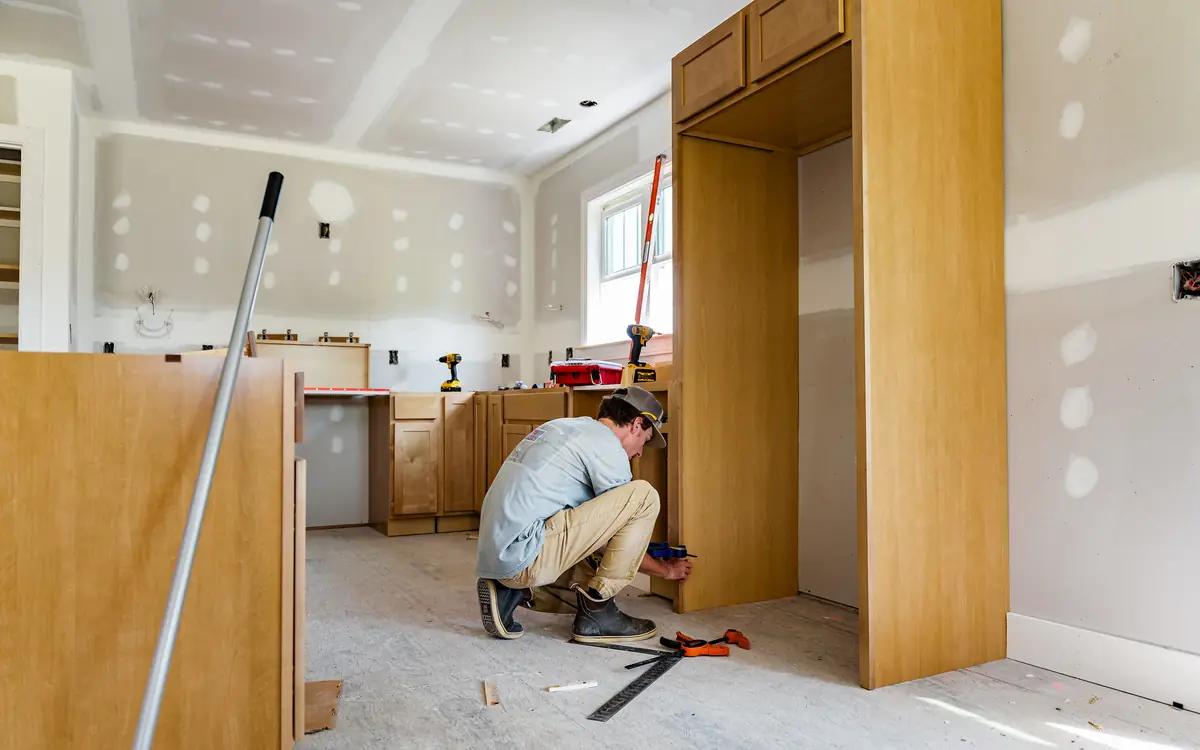
The room is a bedroom of 4 m (13.12 ft) by 3.5 m (11.48 ft), with walls 2.4 m (7.87 ft) high, a door and two windows. Only the walls are painted; the ceiling, the skirting and the door itself are other surfaces with their own paint and their own figures. The numbers are the calculator's cited test vector, which is why the door and window areas are the sizes of a real door and a real window rather than the calculator's round defaults.
Two choices decide the answer more than the room does. The first is the number of coats: 2 here, which is also the calculator's own starting figure. The second is the spread rate, 10 m²/L, the area one litre covers per coat. It is printed on the tin, and it is the figure to take from the tin you intend to buy rather than from this page, because paints differ in how far a litre goes.
The litres this page gives are the paint on the wall. The calculator does not allow for the paint left in the tray and the roller, or for touch-ups, and it does not include primer or a sealer coat on bare plaster. That is a reasonable limit to say out loud before anyone writes a shopping list.
The inputs, exactly as entered
| Input | Value | Why |
|---|---|---|
| Surface to Paint | A room's four walls (length, width, height) | Left at the calculator's own default. |
| Room Length | 4 m (13.12 ft) | Taken along the floor, wall to wall. |
| Room Width | 3.5 m (11.48 ft) | Taken square to the length. |
| Wall Height | 2.4 m (7.87 ft) | Floor to ceiling, applied to all four walls. |
| Number of Doors | 1 | One door opening in the painted walls. |
| Number of Windows | 2 | Two window openings in the painted walls. |
| Area of One Door | 1.89 m² (20.34 sq ft) | A door of the common size, entered as its own area; the opening comes off the paintable wall at this size. |
| Area of One Window | 1.44 m² (15.5 sq ft) | A window of a common size, taken off the walls at its own area. |
| Number of Coats | 2 | The number of coats the finish needs, from the tin or from the colour change; deep colours over a light wall are the usual reason to add one. |
| Paint Coverage | 10 m²/L (407.5 ft²/gal) | The spread rate on the tin of the paint to be used; the calculator divides the area to coat by it. |
The working, step by step
1. Gross wall area
36 m² (387.5 sq ft)
Twice the length plus the width gives the distance round the room, and that times the height is the wall area before any opening is taken out: 36 m². One height is used for every wall, so a stairwell, a chimney breast or a sloped ceiling is not in it.
2. Doors + windows area (subtracted)
4.77 m² (51.34 sq ft)
One door and two windows are taken off at their own areas, 4.77 m² together. Each opening is subtracted at the area entered, so entering the true size of a large window changes the answer more than choosing a different paint would.
3. Paintable area
31.23 m² (336.2 sq ft)
What is left is the surface that takes paint: 31.23 m². The skirting board and the architrave stay inside this figure even though they are usually painted in a different paint, and no extra is added for the frames of the openings that were subtracted.
4. Total area to coat
62.46 m² (672.3 sq ft)
That area is multiplied by the number of coats, 2, giving 62.46 m² to cover in all. The litres are this area divided by the spread rate on the tin: the headline. The same rate is applied to every coat, so the first coat on bare or patched plaster, which drinks more, is not separated from the finish coat.
Estimated paint needed
6.246 L
1.65 gal
The headline is the paint on the walls: 6.246 L, or 1.65 gal. Paint is sold in tins of fixed sizes, so the practical order is the next tin size above, and the answer should be read as a minimum; a little extra for the tray, the roller and touching up is a purchase decision the calculator does not make. The calculator's confidence for this room is high, which describes the arithmetic and says nothing about the state of the plaster.
What to buy
| Quantity | Figure | What it is for |
|---|---|---|
| Estimated paint needed | 6.246 L (1.65 gal) | The paint for the walls at the stated coats and spread rate; round up to the next tin size, never down. |
The allowance, and what it does here
This calculator has no waste input: the paint is bought against a spread rate, and the spread rate belongs to the paint rather than the room. Everything that turns litres on the wall into litres in the tin is outside the arithmetic: paint left in the roller sleeve and the tray, a tin that is opened and stored, a wall that is thirstier than the tin assumes. The honest allowance is the gap between the answer and the next tin size up.
The common mistake
Taking the tin's spread rate as a fact about your wall
The spread rate printed on a tin is a figure for the paint on a surface that suits it, and a new bare plaster wall or a patched one drinks more on the first coat than the number suggests. This calculator applies one rate to every coat, so the first coat of a new surface is where an order made on the tin's rate comes up short. If the wall is bare, treat the answer as a floor, and seal or prime first, which the calculator does not count.
Change the job, and see what moves
The same room, with a third coat
Number of Coats: 3 → 9.369 L (2.475 gal)
Add a third coat, for a dark colour over a pale wall or a patched surface, and the answer becomes 9.369 L. Coats are a straight multiplier on the area: a third coat adds half as much paint again, which makes the number of coats the quickest way to move this order, and the one to settle by test patch before buying.
The same room, in a paint that spreads further
Paint Coverage: 12 m²/L (488.9 ft²/gal) → 5.205 L (1.375 gal)
Choose a paint whose tin states 12 m²/L and the same room takes 5.205 L. A paint that spreads further needs less of it. The room is unchanged and the quantity moves by the ratio of the two spread rates, so compare spread rates before comparing tins by size.
What to run next
- Paint Primer Calculator
A bare or freshly plastered wall takes a primer or sealer first, which the litre figure here does not include.
- Ceiling Paint Calculator
The ceiling is a separate surface with its own area, and is usually painted with a different finish.
- Baseboard & Trim Calculator
Skirting is measured along the wall by length, and painted in its own paint, which is not in the wall figure.
Sources
The method and every constant behind these figures belong to the Paint Calculator, version 1.2.1, last verified 2026-09-17. It rests on:
- Standard interior door/window opening allowances used by professional estimators (~21 sq ft door, ~15 sq ft window)
- Paint coverage rate varies by product — always check your specific paint can's label for its stated coverage per liter/gallon
This job is one of that calculator’s published test vectors, which the test suite re-runs on every build.
Frequently asked questions
- How much paint do I need for a 4 by 3.5 m bedroom?
- For the walls, with a door and two windows taken off and 2 coats at 10 m²/L, the calculator gives 6.246 L. That is 62.46 m² of coats on 31.23 m² of wall. Round up to the next tin size.
- Are the door and windows subtracted from the area?
- Yes. The calculator takes 4.77 m² off for the openings before it multiplies by the coats. The reveals and frames of those openings are not added back, so a deep window reveal that is painted is a small extra on top.
- Does the figure include paint for the ceiling or the skirting?
- No. It is walls only. The ceiling and the skirting are separate surfaces, each with its own area or length and usually its own paint, and each has a calculator of its own.