
SettingsSettings for this calculationUS
Internal length at the waterline.
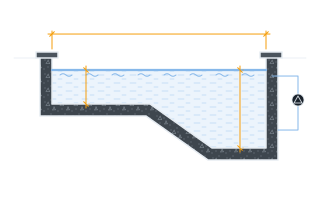
At the WATERLINE, not the coping and not the shell. A floating cover is cut to the shape of the water surface, so anything above the water — the coping overhang, the beam, the surround — is not part of it. On a pool with a roll-out step or a beach entry, the cover follows that shape too, and a rectangle ordered for a pool with a shaped end leaves the end uncovered.
Internal width at the waterline.
Order this generous and trim on site rather than the other way round. A cover slightly too large is cut to fit in an afternoon with scissors; a cover slightly too small leaves a strip of open water permanently, and an uncovered strip goes on evaporating and losing heat at the full rate — which defeats most of what the cover was bought to do.
Average of the shallow and deep ends.
For a pool with a constant slope, average the two end depths. For one with a distinct deep end and a long shallow section, weight by area rather than taking a plain average — a plain average overstates the volume.
A cover covers the water; a liner wraps the shell.
This choice changes WHAT is being measured, not just the price. A cover follows the water surface — one flat shape. A liner follows the shell: the floor, all four walls, the slope into the deep end and every step, which on a typical pool is a far larger area than the surface. Picking the wrong one here gives an answer for the wrong product and it will be wrong by more than a margin.
Material area
338 sq ft
Rectangular geometry. A freeform pool needs a template or a survey — the perimeter of a curved shell is longer than its bounding rectangle suggests.
- Water surface
- 338 sq ft
- Wall area
- 390 sq ft
- Liner area with 8% allowance
- 786.24 sq ft
- Water volume
- 62.59 yd³
- Area in sq ft
- 338 sq ft
They open the calculator with your figures already in it
Pool Cover & Liner Area Calculator: 338 sq ft — shown in imperial, US market. The link sets both, so the result they see is the one on your screen.
Show calculation logicHide calculation logic
How this was calculated
Formula source(s)
- Solar covers are cut to the water surface; overlapping the coping traps debris and shortens cover life
- Liner area = floor + walls, plus an allowance for the bead track and floor radius
Inputs used
- Pool length
- 26 ft
- Pool width
- 13 ft
- Average depth
- 5 ft
- Material
- Solar or winter cover — surface only
- Liner allowance
- 8
Intermediate steps
- Water surface
- 338 sq ft
- Wall area
- 390 sq ft
- Liner area with 8% allowance
- 786.24 sq ft
- Water volume
- 62.59 yd³
- Area in sq ft
- 338 sq ft
Confidence note: Rectangular geometry. A freeform pool needs a template or a survey — the perimeter of a curved shell is longer than its bounding rectangle suggests.
What this calculation does not cover
- Assumes a rectangular pool with a uniform average depth. Steps, benches and a distinct deep end all change the wall area.
- A liner should be ordered against the manufacturer's measuring form, not a calculated area.
Estimated cost — your price
This site holds no price list for this material — local prices vary too much to publish honestly. Enter your supplier's price and the result is costed with it.
Part of a bigger job
This trade is one line of a job takeoff. Run the whole job and every other trade comes back with it, off the same measurements.
Computed in your browser — nothing you enter is uploaded. Presented in US customary units and US trade terminology. Where a formula follows a published standard, that standard and its edition are cited beside it on this page; where none governs, the page says so. Local amendments override model codes — verify against the code in force where you build.
Sources checked 2026-09-17 · v1.1.0
Regulatory standards & verification citations2
- Solar covers are cut to the water surface; overlapping the coping traps debris and shortens cover life
- Liner area = floor + walls, plus an allowance for the bead track and floor radius
Cite this page
Your workspace
Most jobs need more than one number. Add the calculators you need next and they open right here, underneath this one — your figures stay on screen and nothing is lost to a page change.