
SettingsSettings for this calculationUS
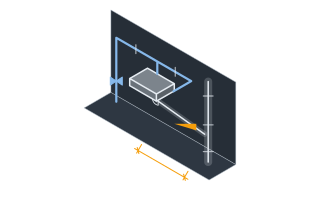
How many fixtures of the kind chosen below the drawing shows.
Count from the plumbing layout or the plan takeoff's fixture layer. A double-bowl sink with one waste counts once.
The kind decides how many supplies each one takes and whether it needs a trap.
Basins and sinks take a hot and a cold supply and a trap under the waste. A WC takes one cold supply to the cistern, and its trap is moulded into the pan.
Extra connectors and stops to have on the van, rounded up to whole parts.
Leave it at zero for the exact count the fixtures take.
Supply stops
8 stops
4 basins, 2 supplies each and a trap under each waste. Supply and drainage design, and the work, are for a licensed plumber under the local plumbing rules.
- Flex connectors
- 8 connectors
- Traps
- 4 traps
- Waste outlets (plug and strainer, or pop-up)
- 4 fittings
They open the calculator with your figures already in it
Plumbing Fixture Connection Calculator (Supply Stops, Flex Connectors, Traps and Waste Fittings per Fixture): 8 stops — shown in imperial, US market. The link sets both, so the result they see is the one on your screen.
Show calculation logicHide calculation logic
How this was calculated
Formula source(s)
- International Plumbing Code (2021), 1002.1: each plumbing fixture is separately trapped by a liquid-seal trap, except a fixture with an integral trap such as a water closet
- International Plumbing Code (2021), 606.2: the locations where shutoff valves are installed, including the supply to each plumbing fixture other than baths and showers outside individual dwelling units
- Approved Document H (2015), Drainage and waste disposal, section 1 and Table 1: traps on every point of discharge, minimum trap sizes and seal depths of 32 mm and 75 mm for a washbasin, 40 mm and 75 mm for a sink, a WC's integral trap with a 50 mm seal
Inputs used
- Number of Fixtures
- 4
- Kind of Fixture
- Washbasins or lavatories (hot and cold)
- Spare Parts (%)
- 0
Intermediate steps
- Flex connectors
- 8 connectors
- Traps
- 4 traps
- Waste outlets (plug and strainer, or pop-up)
- 4 fittings
Confidence note: 4 basins, 2 supplies each and a trap under each waste. Supply and drainage design, and the work, are for a licensed plumber under the local plumbing rules.
What this calculation does not cover
- One kind of fixture per run. A plan with basins, sinks and WCs is three runs, each with its own count, because the parts differ: a WC takes one supply and brings its own trap.
- Baths and showers are left out on purpose. Their mixing valve, its own isolation and a bath waste and overflow or a shower trap are a different kit, chosen with the valve.
- A stop is counted at every supply. Whether each fixture must have one depends on the code where you build: the IPC lists where shutoff valves go, and a UK installation commonly puts a servicing valve on every tap and cistern feed.
- Connector lengths, thread sizes and the trap's size and seal are product choices made at the fixture. Approved Document H sets the trap size and seal depth for each kind of fixture in England, and the US codes set their own.
- No pipe is measured or sized here. The supply and drain runs to each fixture, their sizes and the venting are plumbing design, for a licensed plumber under the local rules.
Estimated cost — your price
This site holds no price list for this material — local prices vary too much to publish honestly. Enter your supplier's price and the result is costed with it.
Computed in your browser — nothing you enter is uploaded. Presented in US customary units and US trade terminology. Where a formula follows a published standard, that standard and its edition are cited beside it on this page; where none governs, the page says so. Local amendments override model codes — verify against the code in force where you build.
Sources checked 2026-10-31 · 3 test vectors · v1.0.0
Regulatory standards & verification citations3
- International Plumbing Code (2021), 1002.1: each plumbing fixture is separately trapped by a liquid-seal trap, except a fixture with an integral trap such as a water closet
- International Plumbing Code (2021), 606.2: the locations where shutoff valves are installed, including the supply to each plumbing fixture other than baths and showers outside individual dwelling units
- Approved Document H (2015), Drainage and waste disposal, section 1 and Table 1: traps on every point of discharge, minimum trap sizes and seal depths of 32 mm and 75 mm for a washbasin, 40 mm and 75 mm for a sink, a WC's integral trap with a 50 mm seal
Which documents these citations point at
- International Plumbing Code (United States)Plumbing systems — fixtures, water supply, sanitary drainage, venting and storm drainage.
- Approved Documents to the Building Regulations (England) — H (United Kingdom)Practical guidance on meeting the Building Regulations, one lettered part per subject — Part A structure, Part B fire, Part K protection from falling, Part L conservation of fuel and power, and the rest.
A code or standard has force only where a jurisdiction has adopted it, usually with local amendments. This site holds no adoption data for any authority, so check what is in force with the authority where you build. Any section cited above without an edition should be checked against the edition in force where you build. What it would take to know.
Cite this page
Your workspace
Most jobs need more than one number. Add the calculators you need next and they open right here, underneath this one — your figures stay on screen and nothing is lost to a page change.
Tools and safety for this job
To cut and prepare copper pipe and cut and join plastic pipe. Generic types, no brands, no prices.
Protection this work requires
- Knives cause more site injuries than any power tool: cut away from your body, change blades often, and wear cut-resistant gloves to EN 388 level C for repeated cutting.
Cut and prepare copper pipe: Cutting and joining pipe is within reach of a competent DIYer; the system it joins may not be. Work on a gas supply, an unvented cylinder, or a sealed heating system is restricted to a registered installer in most markets, and a tool list is not a qualification.
Cut and join plastic pipe: Push-fit and solvent-weld plumbing is within reach of a competent DIYer. The regulated parts of the system — gas, unvented hot water, and anything notifiable — are not, whatever tools are to hand.
Show the 5 tools this job needsHide tools
Essential
Copper pipe cutter
Deburring tool and wire wool
Plastic pipe shears
Tape measure
Recommended
Adjustable spanner and grips
Also needed as materials: cutting wheels.
what each plumbing tool is for, and the spec that decides which to buy where one does.