
SettingsSettings for this calculationUS
Area of bed or plot.
The area the blend is going onto. This is the reverse of most volumes on this site: the depth is small and the area is large, so a small error in DEPTH matters far more here than a small error in area does — dressing a bed at twice the intended depth doubles the order. Decide the depth against what the planting needs rather than against what looks generous on the day.
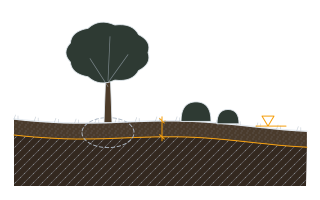
Depth of compost spread before incorporating.
25-50 mm is the usual annual dressing. More than 75 mm in one go can push organic content high enough to hold too much water and lock up nitrogen while it finishes breaking down.
How deep it is dug or tilled in.
150-200 mm is a spade's depth and the usual working layer. This sets the resulting organic percentage: the same compost dug in deeper produces a lower concentration over a larger volume.
Compost required
1.36 yd³
Volume is exact; the resulting organic percentage assumes even incorporation, which hand digging achieves better than a rotavator on a first pass.
- Litres
- 1,038.28 L
- 50 L bags
- 21 bags
- Cubic yards
- 1.36 yd³
- Resulting organic content by volume
- 25 %
- Approximate weight
- 1,258.96 lb
They open the calculator with your figures already in it
Compost Blend Calculator: 1.36 yd³ — shown in imperial, US market. The link sets both, so the result they see is the one on your screen.
Show calculation logicHide calculation logic
How this was calculated
Formula source(s)
- A 25-50 mm compost layer incorporated into the top 150-200 mm is standard soil-improvement practice — university extension horticulture guidance
- Target organic matter for productive vegetable soil is commonly 5-10% by volume
Inputs used
- Area to improve
- 220 sq ft
- Compost layer depth
- 2 in
- Incorporation depth
- 6 in
Intermediate steps
- Litres
- 1,038.28 L
- 50 L bags
- 21 bags
- Cubic yards
- 1.36 yd³
- Resulting organic content by volume
- 25 %
- Approximate weight
- 1,258.96 lb
Confidence note: Volume is exact; the resulting organic percentage assumes even incorporation, which hand digging achieves better than a rotavator on a first pass.
What this calculation does not cover
- The resulting organic percentage divides the compost layer by the compost plus the soil beneath it, which counts the compost as entirely organic matter and the ground it goes into as carrying none, so a bed improved in previous seasons finishes above the figure shown and a bagged blend bulked out with sand or loam finishes below it.
- That percentage is a by-volume figure read at the moment of mixing, and a laboratory soil test reports organic matter by weight instead — compost is light enough against mineral soil that the two numbers do not convert into one another.
- Nothing in the volume allows for the material shrinking as it rots down, so an autumn dressing measured again in spring sits thinner than the depth entered and its share of the working layer drifts down with it.
- Approximate weight is the volume multiplied by one fixed density, which does not move with how wet the load arrives or with the difference between a light green-waste compost and a heavier loam-based blend, so treat it as a barrow-and-trailer guide rather than a delivery weight.
- The bag figure assumes a 50 litre (about 1.8 ft³) sack and rounds up to whole bags, so if your supplier sells another size you need to divide the volume line yourself.
- Area is spread at one uniform depth with nothing deducted for established plants, crowns or the paths you will not be dressing, so enter the ground you actually intend to cover rather than the footprint of the whole plot.
Estimated cost — your price
This site holds no price list for this material — local prices vary too much to publish honestly. Enter your supplier's price and the result is costed with it.
Computed in your browser — nothing you enter is uploaded. Presented in US customary units and US trade terminology. Where a formula follows a published standard, that standard and its edition are cited beside it on this page; where none governs, the page says so. Local amendments override model codes — verify against the code in force where you build.
Sources checked 2026-09-05 · in the site-wide review of 2026-09-06 · v1.0.1
Regulatory standards & verification citations2
- A 25-50 mm compost layer incorporated into the top 150-200 mm is standard soil-improvement practice — university extension horticulture guidance
- Target organic matter for productive vegetable soil is commonly 5-10% by volume
Cite this page
Your workspace
Most jobs need more than one number. Add the calculators you need next and they open right here, underneath this one — your figures stay on screen and nothing is lost to a page change.