
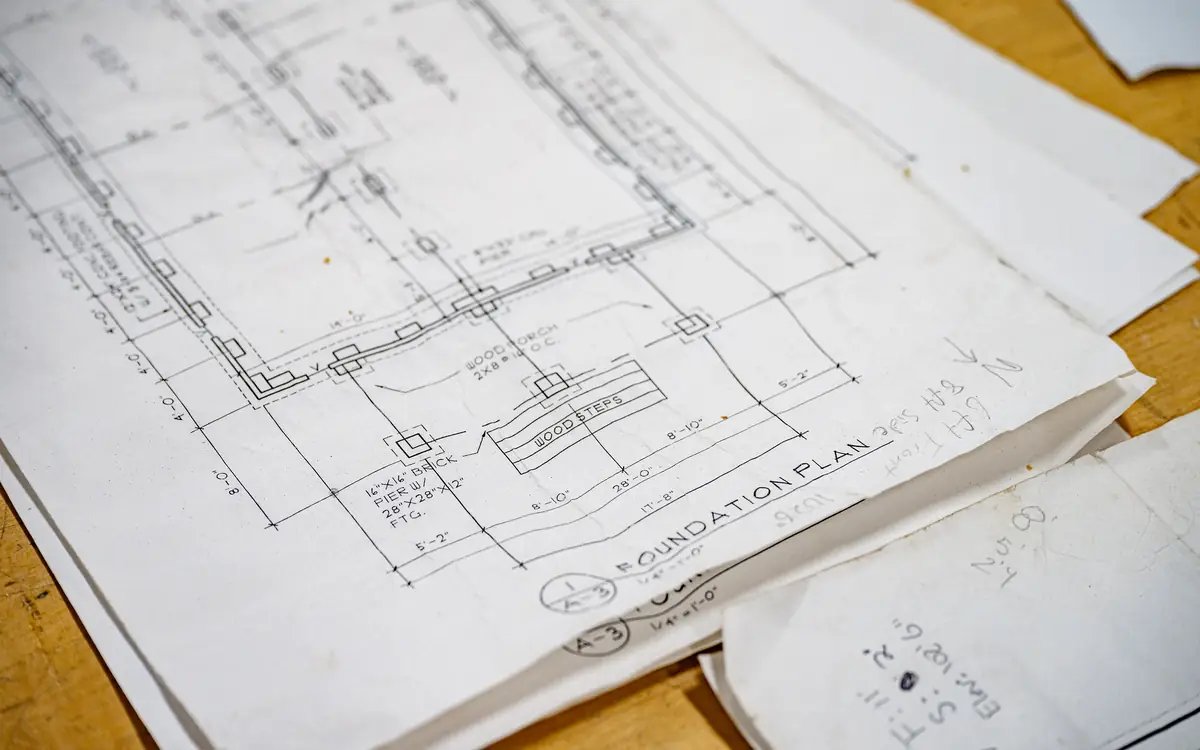
Eight thousand four hundred and twenty pounds, payable Friday
The groundworks invoice came in on the tenth. One line — groundworks to rear extension as agreed — and a figure of £8,420 before VAT, from a firm that has been on three of your jobs and has never sent a breakdown in its life. The pay run is Friday, the bookkeeper wants a number, and the number is not the one on the invoice.
Three separate questions stand between that document and the transfer, and only the last of them is arithmetic. Whether this payment falls inside the Construction Industry Scheme at all is settled by the contract, not by the invoice. What percentage applies is settled by HMRC, not by what the subcontractor believes their status to be. And the sum the percentage is applied to is settled by what the invoice can actually evidence, which is why a single-line invoice is a problem before it is a document. Take them out of order and the usual result is a deduction taken on the whole £8,420, which is over-deducting by several hundred pounds and is not something you can quietly hand back a fortnight later.
Whether the payment is inside the scheme is settled by the contract
The scheme is in Chapter 3 of Part 3 of the Finance Act 2004, worked through in detail by HMRC's CIS340 guide, and it bites on a person the Act calls a contractor. Section 59 draws that net in two ways. A mainstream contractor is a business whose trade is construction — a builder, a groundworks firm, a developer, a labour agency supplying construction workers. A deemed contractor is a business that is not in construction at all but spends heavily on it: since 6 April 2021 the test is whether construction expenditure has exceeded £3 million in the previous twelve months, on a rolling basis, replacing the older three-year averaging. A supermarket chain, a housing association and a manufacturer refitting a plant all land inside on that limb, usually late and by surprise. A private householder having their own house extended is not a contractor at all, in either sense, and never has to think about any of this.
The second half of the test is the work rather than the payer. Section 74(2) lists what counts: construction, alteration, repair, extension, demolition and dismantling of buildings and structures; works forming part of the land, from walls and roadworks to pipelines, sewers and industrial plant; the installation in a building of heating, lighting, air-conditioning, ventilation, power supply, drainage, sanitation, water supply and fire protection; internal cleaning done in the course of the construction work; painting and decorating internal and external surfaces; and operations integral or preparatory to those, which is where site clearance, earthmoving, excavation, tunnelling, laying foundations, erecting scaffolding, site restoration, landscaping and access works come in. Section 74(3) then lists what is out, and the exclusions are less intuitive than the inclusions.
Two traps sit in that pair of lists. The first is that manufacture and delivery are outside while installation is inside, so a joinery firm that makes windows in its workshop and delivers them is outside the scheme, and the same firm fitting them into the openings is inside — and if one contract covers both, the mixed-contract rule pulls the whole payment in, including the manufacturing element. The second is that professional work is outside: the structural engineer's calculations and the surveyor's report are not construction operations, however central they are to the job. Where a contract genuinely spans both, the scheme does not let you split it into a taxable half and an untaxable one.
Before any of that, though, decide what the person actually is. The scheme applies to subcontractors, not to employees, and it is not a status test — paying somebody under deduction does not make them self-employed, and HMRC's monthly return carries an explicit declaration that you have considered the employment status of everyone on it. Where the off-payroll working rules in Chapter 10 of Part 2 of the Income Tax (Earnings and Pensions) Act 2003 apply and produce a deemed employment payment, PAYE takes precedence and the scheme does not touch that payment. The agency rules in Chapter 7 of the same Part work the same way. Getting this wrong is more expensive than getting the percentage wrong, because the shortfall is employer's National Insurance rather than tax on account.
| The work being paid for | Position | What settles it |
|---|---|---|
| Erecting, adapting and striking scaffold | Inside | Section 74(2) names the erection of scaffolding among operations integral to construction |
| Hiring the scaffold materials with no labour | Outside | It is a hire of equipment rather than an operation carried out on the site |
| Making windows in a joinery shop and delivering them | Outside | Section 74(3) excludes the manufacture of components off site and their delivery to site |
| Fitting those same windows into the openings | Inside | The installation is an operation on the building, whoever manufactured the unit |
| The engineer's calculations for the opening | Outside | Section 74(3) excludes the professional work of consultants in building and engineering |
| First fix of heating, drainage and water supply | Inside | Section 74(2) covers installation of those systems in a building or structure |
| Painting the new elevation, inside and out | Inside | Section 74(2) covers painting or decorating internal or external surfaces |
| Installing the intruder alarm and the CCTV | Outside | Section 74(3) excludes installation of security systems, burglar alarms and closed circuit television among them |
| Signwriting the fascia and hanging the signboard | Outside | Section 74(3) excludes signwriting and the erection of signboards and advertisements |
Nil, twenty or thirty is HMRC's answer, not the subcontractor's
You do not decide the rate and neither does the subcontractor. Section 69 of the Finance Act 2004 and regulation 6 of the Income Tax (Construction Industry Scheme) Regulations 2005 require you to verify with HMRC before the first payment under a contract, giving your own accounts office and employer references together with the subcontractor's name and unique taxpayer reference — plus the company registration number for a limited company, or the firm name and partnership UTR for a partnership. HMRC answers with a status and a verification reference number, and that answer is the instruction. The three outcomes are gross payment, payment under deduction at the standard percentage, and payment at the higher percentage. HMRC's contractor guidance on making deductions states those percentages as 20 for a registered subcontractor and 30 for an unregistered one, with nil for gross status; CIS340 itself now points to that page rather than printing a rate, because the rate is the sort of thing that changes without the guide being reissued.
The higher rate is not a penalty for being a bad business. It is what applies when the subcontractor is not registered for the scheme, and equally when they are registered but HMRC cannot match the details you supplied to a record. An unmatched verification comes back with a reference ending in one or two letters after the ten digits, and that suffix is the whole message: deduct at 30 until the details are corrected and the subcontractor is re-verified. An unmatched result is very often nothing worse than transposed digits in a UTR, or a trading name given where the registered name is on the record. It is worth one phone call before the pay run rather than a repayment claim after it.
Gross status is not a favour either — it is a set of tests in Schedule 11 to the Finance Act 2004, applied to the individual, the firm or the company. There is a business test, that the work is construction carried on in the United Kingdom through a bank account; a turnover test measured on construction turnover net of materials, at £30,000 for a sole trader, £30,000 per partner or £100,000 for a firm, and £30,000 per relevant director or £100,000 for a company; and a compliance test on tax obligations over the preceding twelve months. From 6 April 2024 the compliance test also takes in VAT obligations, and HMRC gained a power to cancel gross status immediately in cases of serious fraud. A subcontractor who loses gross status will be told, and so will you, and the change applies from the date HMRC gives rather than from the date you notice it.
One thing that catches new contractors: a gross-status subcontractor is inside the scheme, not outside it. You verify them, you deduct nothing, and you still report the payment on the monthly return. The nil rate is a rate.
- Verify before the first payment under the contract, not before the first job — a new contract with the same subcontractor does not need a fresh verification if you have paid them and included them on a return in the current tax year or the two before it.
- Give the exact registered details: legal name rather than trading name, the UTR as printed, and the company registration number for a limited company. A partnership needs both the partnership's details and those of the partner you are contracting with.
- Record the verification reference number against the subcontractor, and note whether it came back matched or unmatched.
- Apply the rate HMRC gave you from that point on, including where it contradicts what the subcontractor has told you, and including where it changes mid-contract because HMRC has notified a change.
- Re-verify when the subcontractor has not appeared on one of your returns in the current or previous two tax years, and whenever an unmatched result is corrected.
- Keep the verification result with the payment records. It is the only evidence that a 30 per cent deduction was HMRC's answer rather than your assumption.
What the percentage is applied to
Section 61 is the sentence that does the work: the deduction is taken from so much of the contract payment as is not shown to represent the direct cost of materials. Shown is the operative word. The exclusion is not automatic and it is not the subcontractor's to assert — it is an evidenced figure, and where nothing is evidenced the deduction falls on the whole payment. That is the honest answer to the single-line invoice on the desk: as it stands, the base is £8,420. So you ring and ask for the split, and because the alternative costs the subcontractor several hundred pounds of cash flow it arrives the same afternoon. What follows is what came back.
Three things come out before the percentage goes on. VAT is excluded, and it is excluded whether the invoice shows it, or shows nothing because the domestic reverse charge applies — the scheme works on the VAT-exclusive figure throughout. The CITB levy is excluded where you are recovering your own levy by withholding it from what you owe — HMRC's guidance treats that withheld amount as outside the gross payment, so on a £1,000 price with a £7 levy the figure that goes on the return is £993. And the direct cost of materials is excluded, which extends further than bagged goods: consumable stores, fuel used in plant on the job, and plant hired in by the subcontractor from a third party together with the fuel for it. Fuel for travelling to site is not materials and never has been.
The restriction that changed in recent years is worth knowing because it caught a lot of firms. From 6 April 2021 the Finance Act 2021 amended section 61 so that only materials the subcontractor themselves directly paid for can be excluded. Where your subcontractor has a sub-subcontractor beneath them who bought the concrete, that cost is no longer deductible in your calculation of the payment to your subcontractor, however genuinely it was incurred somewhere down the chain. Ask whose name the merchant account is in before accepting a large materials line.
| Line | Amount | Treatment |
|---|---|---|
| Invoice total, excluding VAT | £8,420.00 | The starting figure — VAT never enters the calculation |
| Concrete, mesh, pipe and bedding, on the subcontractor's own merchant account | £2,900.00 | Direct cost of materials, evidenced by the delivery tickets: excluded |
| Excavator hired from a plant yard, with its fuel | £640.00 | Third-party plant hire and the fuel used in it: excluded |
| The subcontractor's own dumper, charged at a day rate | £180.00 | Plant they own is not materials, and neither is the fuel in it: included |
| Amount the percentage is applied to | £4,880.00 | £8,420 less the £3,540 of evidenced materials and hired plant |
| Deduction at the standard percentage of 20 | £976.00 | Paid to the subcontractor: £7,444.00 |
| Deduction at the higher percentage of 30 | £1,464.00 | Paid to the subcontractor: £6,956.00 |
| Deduction where the subcontractor holds gross status | £0.00 | Paid in full at £8,420.00 — and still reported on the monthly return |
Before accepting a split you did not see built up, rebuild the labour side of it independently: the gang was three men for five nine-hour days, so put 45 hours against a crew of three and apply the rate the contract was let at. If the answer lands nowhere near the £4,880 the invoice implies, the materials figure is the thing to ask about.
The total hours the job is expected to take, per worker.
The rate charged (or paid) per worker, per hour.
The number of workers billed at this hourly rate.
Total crew-hours
40 hours
Figures that depend on a rate wait for yours — this page does not assume one.
They open the calculator with your figures already in it
Labor Cost Calculator: 40 hours — shown in imperial, US market. The link sets both, so the result they see is the one on your screen.
What this calculation does not cover
- One rate is multiplied across every hour and every worker, so there is no tier for overtime or holiday premiums, night and weekend differentials, or a crew that pairs a licensed lead with an apprentice — a mixed-rate job has to be totalled in separate runs and added by hand.
- Crew size acts as a straight multiplier on the hours you entered, which assumes each additional worker stays productive for the full duration: the tasks that will not split across two pairs of hands, the time a crew loses coordinating, and the helper who is only on site for part of the week all leave the total untouched.
- Nothing distinguishes a wage you pay from a rate you are charged, because the same multiplication runs on either. A figure built from raw wages carries no payroll taxes, workers' compensation, insurance or benefits on top of it, while a contractor's quoted rate may already have overhead and profit buried inside — the answer looks identical in both cases.
- Only worked hours are priced. Travel and mobilization, setup and clean-up, tool or equipment hire, disposal, permits and materials all sit outside the figure, and no minimum charge is imposed either — an entry of half an hour returns half an hour of money on a job many trades would bill as a minimum visit.
- The hours you type are taken exactly as they stand, with no contingency for rework, weather, waiting on an inspection or scope that grows once the walls are open, and the rate is held flat for the whole span — a long program approaching the 2,000-hour entry ceiling is still priced at today's number, with no escalation partway through.
Materials at cost, and materials with something on them
Subcontractors mark materials up, and there is nothing wrong with that — carrying the merchant account, the delivery and the risk of a short load is work, and it gets paid for somewhere. What the scheme will not let you do is treat the marked-up figure as the direct cost. If your subcontractor bought £2,900 of concrete and invoiced it at £3,335, the excluded amount is £2,900 and the £435 sits inside the base with the labour. The same is true of a percentage applied across the whole invoice rather than to one line: wherever the margin has been put, it is not a material cost.
This is the part where a contractor is expected to think rather than to transcribe. A materials figure that is obviously implausible — half the value of a labour-only plastering package, say — is not evidence, and accepting it means under-deducting, which is a liability that belongs to you rather than to the subcontractor. Ask for the delivery tickets or the merchant statement on anything material, and if the split cannot be supported, deduct on the figure you can defend and tell the subcontractor why. Nobody enjoys that conversation, and it is far shorter than the one that follows a compliance visit two years later.
Run this backwards on the invoice in front of you. Put in the material cost the subcontractor can actually evidence and the labour you have just rebuilt, then find the markup percentage that reconciles to their total — that percentage is the part of the price you cannot exclude, no matter which line it was written on.
Your direct cost for materials on this job.
Your direct labor cost for this job (wages, not billed rate).
The percentage added on top of costs to cover overhead and profit.
Total price to charge
$9,600
- Cost subtotal
- $8,000
- Markup amount
- $1,600
- Gross margin on the price
- 16.67 %
They open the calculator with your figures already in it
Contractor Markup Calculator: 9,600 $ (total price to charge) — shown in imperial, US market. The link sets both, so the result they see is the one on your screen.
What this calculation does not cover
- Only two cost lines feed the subtotal — materials and labor. Permits, equipment and tool rental, dumpster and disposal fees, subcontractor invoices, insurance, fuel and supervision are not inputs, so anything you have not already buried inside those two figures is neither marked up nor billed.
- Materials and labor are marked up at one identical rate, because the percentage is applied once to their combined subtotal. If you price material at one percentage and labor at another — a common split — price the two separately and add the results, since a single blended figure here will not reproduce that.
- The markup amount in the breakdown is gross, not profit: it is the one figure that has to carry overhead and profit together, and there is no overhead input to separate them. Office costs, vehicles, estimating time and idle days come out of that same amount before anything is left over.
- The gross margin row is the same money expressed against the price instead of against the cost, and it is always the smaller percentage of the two — a 20 per cent markup is a 16.7 per cent margin. It is shown because the two are routinely used interchangeably and are not equal; it is still gross, so overhead has not been taken out of it, and it is not a net profit figure.
- Nothing is added after the markup — the total is exactly the subtotal multiplied by one plus your percentage. Sales tax, VAT or GST, permit fees passed through to the client, and card or financing charges all sit outside it, so the number is a price to quote rather than a finished invoice.
- The costs you enter are treated as final and already known. There is no waste allowance and no contingency term, so if supplier prices move between quote and purchase or the hours run long, the overrun comes out of the markup instead of being added to the price.
- Each cost line accepts up to 500,000 and the markup up to 200 per cent, which caps how large a single job this will price without splitting it. The currency is a label only: the answer comes back in whatever currency you typed the costs in, with no conversion and no rounding to a tidy quotable figure.
Plant, fuel, and the thing the rule quietly rewards
The plant rule produces an outcome that looks arbitrary until you see what it is doing. An excavator hired in from a yard is a cost the subcontractor paid to a third party, so the hire charge and the fuel burned in it are treated as materials and come out of the base. The identical machine, on the identical dig, owned by the subcontractor and charged at a day rate, is not — that day rate is part of what they are being paid for doing the work, and it stays in. Two firms doing the same job to the same programme can therefore face materially different deductions on the same price.
It is not a reason to restructure a business around a tax timing difference, and any subcontractor who tells you it is has the tail wagging the dog: the deduction is on account of a liability that has to be settled either way. But it is a real term in a decision small firms make constantly, because the deduction changes when cash arrives rather than how much of it there eventually is, and cash timing is what kills subcontractors. A firm running at the higher percentage, with a machine it owns and a thin materials line, can find a third of its turnover arriving several months late.
The straightforward break-even is the purchase price divided by the daily hire rate. Read the answer knowing that hire charges leave the deduction base and an owned machine's day rate does not, which pushes the honest break-even further out than the arithmetic alone suggests for a subcontractor being paid under deduction.
The cost to buy the equipment outright.
The cost to rent the same equipment for one day.
The hire firm's week rate, if they quote one. Zero means day rate only.
How many days the equipment is actually needed for.
What you expect to sell it for afterwards, if you will.
Break-even rental days
Needs your rates
This page does not assume a price. Enter yours and the answer appears here.
They open the calculator with your figures already in it
Equipment Rental vs. Buy Calculator — shown in imperial, US market. The link sets both, so the result they see is the one on your screen.
What this calculation does not cover
- The daily rate is the sticker, not the invoice. Yards add a damage waiver, environmental and fuel charges, and delivery and pickup on anything you cannot carry in a truck, and many bill an eight-hour meter day — run a machine ten hours and it counts as more than one day. Each of those raises the real cost of renting, which moves the true break-even below the day count shown here.
- It assumes the rented machine and the bought machine are the same machine, and at the same price they usually are not. Rental fleets are contractor-grade and built for daily abuse, while the tool a comparable purchase price buys is often a lighter homeowner model with less capacity and a shorter life. Matching the rented machine's specification costs more to buy and pushes break-even further out.
The tax month, and the four dates inside it
The scheme's calendar is not the calendar month. A tax month runs from the 6th to the 5th, so a payment made on 4 May belongs to the month ending 5 May and is reported and paid over in the same cycle as one made on 8 April. Payment date governs, not invoice date and not the date the work was done, which means a payment run held back three days to the following Tuesday can cross a month boundary and change everything downstream of it.
Two documents come out of each month. The monthly return, CIS300, is due by the 19th and reports every subcontractor paid, the gross amount excluding VAT, the materials cost and the deduction. It carries two declarations that are easy to click past and are not decorative: that the employment status of every subcontractor listed has been considered, and that every one of them has been verified or has appeared on a recent return. Alongside it, each subcontractor from whom a deduction was taken must be given a payment and deduction statement within fourteen days of the month end — the same 19th — showing the same figures. That statement is their only evidence for reclaiming the money, and a subcontractor who cannot produce it has a genuine problem that started on your desk.
The money itself follows on the 22nd where it is paid electronically, or the 19th where it is not, and it goes over with the PAYE for the same month. A business whose average monthly PAYE and CIS liability is under £1,500 can pay quarterly. If you paid nobody in a month you still file — a nil return, or a notification of inactivity that covers you for up to six months, after which the returns are expected again. Doing neither is the most common way a compliant firm collects penalties for months in which it did nothing at all.
Keep the records for at least three years after the end of the tax year they relate to: the verification references, the invoices and the evidence behind every materials figure you accepted. The evidence is the part firms skip, and it is the part a compliance visit asks for.
| How late the return is | Penalty |
|---|---|
| One day | £100 |
| Two months | A further £200 |
| Six months | A further penalty of the greater of 5 per cent of the deductions shown on the return and £300 |
| Twelve months | A further penalty on the same basis, increased where information has been withheld deliberately |
The deduction is not a cost and it is not yours
It is worth being precise about what has happened to the £976, because both parties routinely misdescribe it. It is not a discount, it is not a retention, and it is not a fee. Section 62 treats the sum deducted as paid on account of the subcontractor's own liability to tax and National Insurance — their money, collected early, passing through your account for a matter of weeks. That framing decides every argument about it. A subcontractor who says the deduction has cost them a thousand pounds has confused a date with a number.
How they get it back depends on what they are. A company subcontractor sets the deductions suffered against its own PAYE, National Insurance and CIS liabilities through the Employer Payment Summary in its real-time information filings, and anything still unused is repaid after the end of the tax year. A sole trader or a partner carries the deductions into Self Assessment, where they come off the income tax and Class 4 National Insurance for the year and very often produce a repayment, because 20 per cent of a labour-heavy turnover usually exceeds the liability on the profit that turnover produces. That repayment is the reason a great many subcontractors file early.
For the contractor the practical consequence is a small one that gets forgotten: the deduction is not working capital. It leaves on the 22nd whether or not the client has paid you, and a firm treating the CIS account as a buffer is borrowing from HMRC at a rate it will not enjoy discovering.
When the deduction was wrong
Under-deducting is the expensive error, because the liability sits with the payer. HMRC can recover the amount that should have been deducted from the contractor, not from the subcontractor who received it, and can do so years later. Regulation 9 of the 2005 regulations offers two ways out, and both need a direction from HMRC rather than a decision by you. The first is available where the contractor satisfies HMRC that it took reasonable care to comply with the scheme and the failure was an error made in good faith, or arose from a genuine belief that section 61 did not apply to the payment. The second is available where HMRC is satisfied that the subcontractor was not chargeable on that payment, or has made a return and paid the tax due on it. The first turns entirely on whether you can show the care you took, which is another way of saying it turns on your records.
Over-deducting is the awkward error rather than the costly one. Once the deduction has been paid over and reported, you cannot simply refund it in the next payment run: the sum is in HMRC's hands, the subcontractor's statement says what it says, and the correction route runs through their own return or, for a company, their set-off. Within the same tax year an error can usually be dealt with by amending the return, which is why the check that matters happens before the 19th and not after it. If you catch it on the 20th, tell the subcontractor immediately and put the amendment in — the thing they cannot survive is finding out in July.
The pattern behind almost all of it is the same. Deductions go wrong when the payment is made first and the paperwork is reconstructed afterwards, and they go right when verification, the materials evidence and the rate are settled while the invoice is still an unpaid document. Nothing in the scheme is difficult. All of it is order-dependent.
The regimes next door
The same invoice is usually carrying a second mechanism. The domestic reverse charge in HMRC's VAT Notice 735 applies to supplies of construction services within the scope of the scheme between VAT-registered businesses where the customer is not an end user — which is exactly the position of a contractor paying a subcontractor mid-chain. When it applies, the subcontractor's invoice shows no VAT for you to pay and states that the reverse charge applies; you account for the output tax and recover it in the same return. It has no effect at all on the deduction, which was computed on the VAT-exclusive figure in either case. The interaction between the two is one line of arithmetic and a great deal of confusion, most of it caused by treating the reverse charge as though it changed the amount owed.
Elsewhere the shape recurs with different numbers. The Republic of Ireland runs Relevant Contracts Tax under Chapter 2 of Part 18 of the Taxes Consolidation Act 1997, with rates of nil, 20 and 35 per cent, a contract notification and a payment notification filed through Revenue Online Service before the money moves — closer to the United Kingdom scheme than anything else, and different enough in its mechanics that a firm working both sides of the Irish Sea should not assume a process transfers. In the United States there is no construction-specific withholding, but backup withholding under section 3406 of the Internal Revenue Code requires a payer to withhold at 24 per cent where a payee has not furnished a correct taxpayer identification number on Form W-9, with the payment reported on Form 1099-NEC. Three different regimes, one common design: the obligation, the arithmetic and the liability all belong to whoever is writing the cheque.
Settle these before the transfer leaves
Everything that has to be true before a subcontractor is paid under the scheme, in the order it has to be true — because every one of these is cheap to fix while the invoice is unpaid and expensive to fix afterwards.
- The contract, read against the section 74 lists — Manufacture and delivery are outside, installation is inside, professional work is outside, and a contract spanning both is wholly inside — so decide this from the contract rather than from the invoice description.
- Employment status, considered and recorded — The monthly return declares that you have done it. Where the off-payroll rules in Chapter 10 of Part 2 of ITEPA 2003 produce a deemed employment payment, PAYE displaces the scheme entirely for that payment.
- A verification reference obtained before the first payment — Legal name, UTR as printed, company registration number where there is one. An unmatched result comes back with letters after the ten digits and means 30 per cent until the details are corrected.
- The rate HMRC gave you, applied from the date they gave — Nil, 20 or 30, and none of them is negotiable with the subcontractor. Gross status is still inside the scheme: verify, deduct nothing, and report the payment anyway.
- The materials figure, evidenced and directly the subcontractor's own — Delivery tickets or a merchant statement, at cost rather than marked up, and since 6 April 2021 only where that subcontractor paid for them — not a sub-subcontractor beneath them.
- The four dates: 5th, 19th, 19th and 22nd — Tax month ends the 5th, return and payment-and-deduction statement due the 19th, money over by the 22nd electronically. Payment date governs which month a payment falls in, not invoice date.
Opens the calculators above on one screen with the dimensions from this article already filled in. Quantities only — this site publishes no price list, because local prices vary too much to publish honestly.