
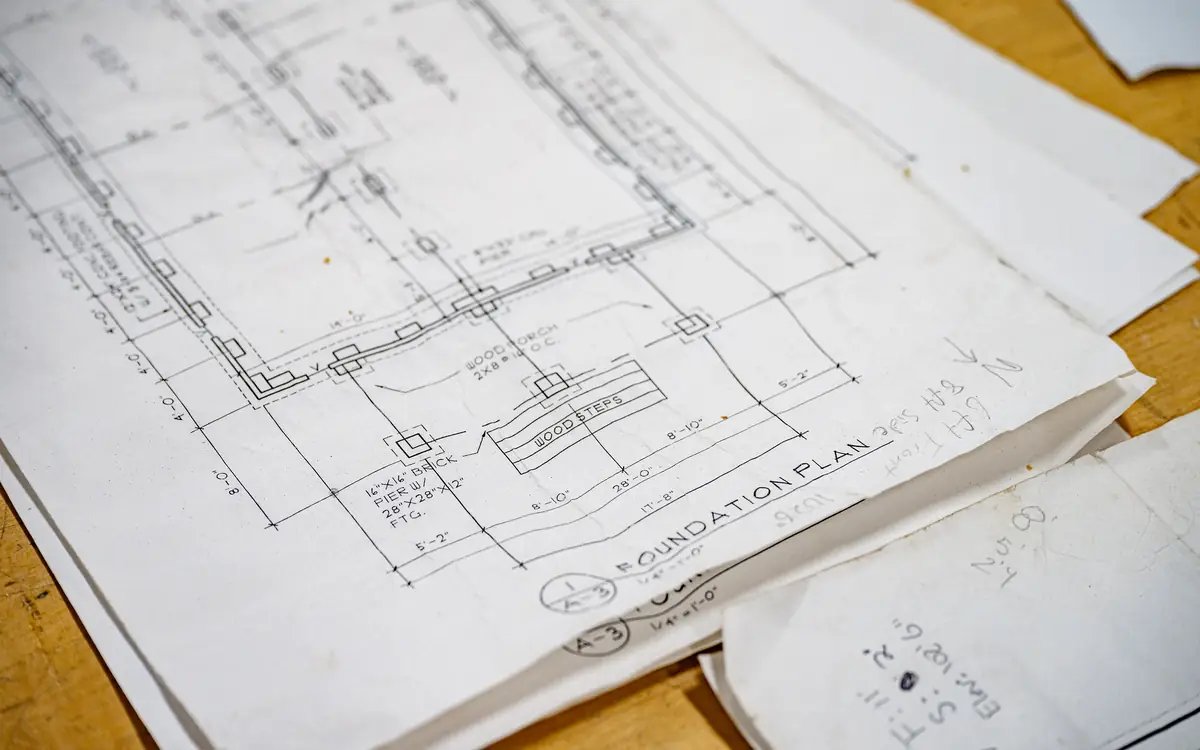
Ninety-one days, and a number that has never been that shape
The bill is on the counter and it is roughly double. Nothing in the house changed: same people, same showers, same washing machine, nobody filled a pond. The instinct is to start opening cupboards and looking for damp, and that instinct is usually about six steps ahead of the evidence. Before anything gets diagnosed, establish that extra water actually left the main — because a bill can double without a single additional litre moving.
Three billing mechanisms do it routinely. The first is an estimate followed by a correction: a period nobody could read the meter for is billed on an assumption, the next visit finds the true register, and the whole shortfall lands in one document. Look for the read codes printed beside the opening and closing figures, since utilities mark estimated reads distinctly from actual ones, and two estimates followed by an actual is the classic shape.
The second is the length of the period — a quarter is not a fixed thing, and ninety-one days against seventy-eight is seventeen per cent more consumption at exactly the same daily rate. The third is a register that rolled over, was transposed by a digit on entry, or belonged to a meter exchanged mid-period, where the closing read of the old unit and the opening read of the new one have to reconcile and sometimes do not. None of the three has anything to do with the plumbing, and all three are settled by comparing the bill against the meter rather than against last year.
So the first act is arithmetic rather than plumbing. Take the closing read printed on the bill, walk out to the meter, and read it now to every digit the register shows. Divide the difference by the days since that closing read. If the daily figure since the bill was issued sits far below the daily figure the bill charged for, the bill was an estimate catching up and there may be nothing wrong with the house at all. If it is on the same trajectory, water is still leaving at the new rate, and everything below applies.
What one more litre costs, which is not the bill divided by the volume
Every calculation on this page needs a rate, and the obvious way to get one is wrong twice over. Dividing the total bill by the volume folds in the fixed service charge, which is payable whether the house uses anything or not, and inflates the apparent cost of each unit. Then it ignores block pricing, which pushes in the other direction: where a utility charges increasing rates in tiers, the water a leak wastes is not average water — it is the last water, priced in the highest block the household reaches. On a tiered tariff a doubled volume costs rather more than double, and the number that describes the leak is the marginal rate in the top block reached, not the average across the bill.
Then add the sewer side, which is frequently the larger half of the two. Wastewater is very commonly billed volumetrically against the metered water figure, on the reasoning that what comes in mostly goes out: in England and Wales as a stated proportion of metered volume set out in the company's charges scheme, and in North America often as the metered volume itself, sometimes capped for residential accounts at a winter average so summer irrigation is not billed as sewage. The consequence for a leak is blunt. Where that is how the account is charged, every litre through the meter is billed twice, and the marginal rate to use anywhere below is the water block rate plus the sewer volumetric rate added together — with one asymmetry worth knowing before any argument with the utility, since a leak underground or at an outside tap never reaches the sewer at all and is billed for treatment it did not use.
Get the units straight in the same sitting, because the register unit and the billing unit are frequently not the same. North American residential meters commonly register in cubic feet and bill in hundreds of them, the CCF, which is 748 US gallons; some utilities bill per thousand gallons instead, and a metric register counts cubic metres of a thousand litres or 264 US gallons each. A leak rate worked out in litres a minute and priced against a per-thousand-gallon tariff is wrong by a factor nobody catches, because the answer still looks like a plausible amount of money.
| Line | What it is charged on | What a leak does to it |
|---|---|---|
| Fixed, service or standing charge | The connection and its meter size, per period, regardless of use | Nothing. It is the same on the doubled bill as on every previous one, which is why it must come out before any per-unit rate is worked out |
| Volumetric water charge | Metered volume, flat or in increasing blocks | Moves at the marginal block rate, not the average — on a tiered tariff the wasted water is priced in the highest block the household reaches |
| Volumetric wastewater or sewer charge | Metered volume, or a stated proportion of it under the charges scheme | Usually moves by the same volume again, which is why the honest rate for pricing a leak is water plus sewer added |
| Stormwater or surface water drainage | Impervious area, or a flat charge per property | Nothing, since it is not metered at all — and a property that drains to a soakaway may be entitled to have it removed on other grounds entirely |
| Leakage allowance or adjustment credit | A repaired leak, evidenced and dated, under the utility's own policy | Reduces the bill after the fact rather than before it, and most schemes are one-off, time-limited and conditional on proof of repair |
An hour at the meter, and the flows a meter cannot see
Find the meter and read the whole register, including whatever the odometer treats as fractional. Nearly every mechanical meter carries a low-flow indicator alongside the digits — a small triangle, a star, or a red sweep hand — geared to turn visibly at flows far below the resolution of the counting wheels, and that indicator moving with every fixture in the house closed is the fastest positive result in this trade. Solid-state and AMI meters replace it with a leak flag raised when the register never records a zero-flow interval across a defined window: the same test done by a clock instead of an eye.
It is a one-way test, though. A positive-displacement meter — nutating disc or oscillating piston — registers low flows well because every drop has to displace the measuring chamber to get past, while a multi-jet or turbine meter needs velocity to turn its rotor and stops registering below it. Both are built to a floor: AWWA C700 sets a minimum test flow and an accuracy band for displacement meters, and EN ISO 4064-1 with OIML R 49 call the same idea Q1, with the meter's class expressed as the ratio of permanent flowrate Q3 to it. Take that figure from the standard the meter was built to, not from memory. A still indicator therefore does not prove there is no leak — only none big enough for this meter to see, and a real tap drip sits under the threshold.
What the test measures is register drift over a known interval with the house isolated, and it wants an hour rather than a few minutes: the smallest digit divided by a short interval is mostly rounding error. Where the utility offers a portal with interval data, read that first and save the hour. A continuous leak shows as a floor that never returns to zero, most obviously between two and five in the morning, and the night that floor first appears dates the start of the leak — exactly what a leakage allowance claim asks for, and the one thing nobody can reconstruct later.
Convert the drift into a rate and it becomes money. A fifth of a cubic foot in an hour is about 1.5 US gallons an hour, or 0.025 a minute, which is within sight of a running toilet; ten litres an hour is 0.17 litres a minute, and left alone that is nearly ninety cubic metres a year. Set against the WaterSense figures the US Environmental Protection Agency publishes — about ten thousand gallons a year lost to leaks in an average household, a tenth of homes losing ninety gallons a day or more — it stops being abstract quickly.
- Close every tap, wait until the washing machine and dishwasher are idle, and switch off the ice maker, humidifier, softener, reverse-osmosis unit and irrigation controller at their own supplies.
- Read the register to its finest digit and note where the low-flow indicator sits against a fixed reference — a scratch, a screw head, the case seam.
- Leave it an hour with nobody using water, photographing the register at both ends rather than trusting a written note.
- Read it again. Any movement is continuous flow, and the difference over sixty minutes is the whole-house leak rate in the register's own unit.
- If it moved, close the internal stop valve and repeat. Movement that continues is upstream of it in the buried supply pipe; movement that stops is inside the house.
- Leave the utility's boundary stop tap alone — it usually belongs to the company, it is often old enough to fail when operated, and breaking it turns a bill dispute into an excavation.
Enter the flow the register drift gave you, converted to the calculator's unit, and the rate as water plus sewer volumetric added together — that combined figure is what a leaking litre actually costs, and it is usually close to twice the number printed against water alone.
How fast the leak flows, in the unit shown.
Your local water utility's volumetric rate, in the unit shown.
Water wasted per year
17,400 gal
Figures that depend on a rate wait for yours — this page does not assume one.
They open the calculator with your figures already in it
Water Leak Cost Calculator: 17,356 gal — shown in imperial, US market. The link sets both, so the result they see is the one on your screen.
What this calculation does not cover
- A leak on the hot side costs the water and the energy that heated it. Raising the same volume 40-50 °C (70-90 °F) at typical fuel prices runs several times the water charge itself, so a dripping mixer or a hot supply weeping past a valve is mostly a fuel bill wearing a water bill's clothes. This figure sees only the volume.
- The result runs the entered rate for all 525,600 minutes in the year. A flapper that only weeps for a while after each flush, an irrigation line that is only live in season, or a leak that has been steadily worsening each has a duty cycle, and cost scales straight in proportion to it — time the minutes it actually runs in a day and pro-rate, rather than accepting the continuous-flow assumption baked in here.
The dye tablet, and the two entirely different things a toilet does wrong
Drop a dye tablet or a good few drops of food colouring into the cistern, not the bowl, and then do nothing for twenty minutes. Not ten: a slow seal leak takes longer than the packet suggests, and the commonest false negative in this exercise is an impatient dye test on the toilet that turns out to be the culprit. Colour in the bowl with nobody flushing means water is leaving the tank continuously. While the tablet works, look at what has been living in that tank — an in-tank chlorine block resting against the flapper is the most reliable way there is to destroy one, and both Fluidmaster and Korky say so in their literature, to the point of excluding the damage from warranty.
Now read the water level, because the dye proves flow and the level proves route. A level fallen away from the fill line means water is passing the flush valve seal into the bowl while the fill valve tops the tank up in bursts — the phantom flush, audible at intervals, the fault everyone means by a running toilet. A level sitting at the lip of the overflow tube and staying there means the fill valve is not shutting off and the tank is pouring its inflow down the overflow instead. Both put dyed water in the bowl; they are different repairs, a seal against a seat versus a valve that has lost its shut-off, and the second is normally the larger flow. That tube's height is not arbitrary either — the anti-siphon fill valve's critical level marking has to stand clear of it, which is what ASSE 1002 governs and what stops a tank siphoning back into the supply.
Put a number on it rather than a description, because a running toilet is nothing like a drip and the calculator above wants a flow. Close the isolating stop under the cistern so the fill valve cannot mask the loss, pencil the level on the inside wall, wait ten minutes and mark it again. The volume falls out of one clean identity: a millimetre of drop over a square metre of tank is a litre, or in inches, inside length by width by drop divided by 231 for US gallons. Divide that volume by ten for the rate per minute, which is the unit the leak calculator above is asking for — multiplying a ten-minute figure by six gives litres per hour, and entering an hourly figure in a per-minute field overstates the leak sixtyfold. It only works on a leaking flush valve — where the fault is a fill valve that will not close, isolating the supply stops the leak by definition, and the rate has to come from the meter with that toilet's stop the only thing open in the house.
- Dye the cistern, not the bowl, and leave it twenty minutes with nobody using that bathroom.
- Check the bowl for colour, then whether the tank level has fallen from the fill line or is sitting at the overflow lip.
- Close the isolating stop, mark the level, and time a ten-minute drop to get the seal leak as a volume.
- For a fill valve that will not shut off, measure that toilet alone at the meter with every other stop in the house closed.
- Flush and refill before leaving, so nobody meets a dyed bowl and an isolated tank with no note on it.
Rebuild it now, replace it later, and do not count the saving twice
The repair is small and it is the urgent half of the job: a flapper or drop-valve seal, a fill valve, or a rebuild kit matched to the flush valve rather than to the brand on the porcelain — and if the seat the seal closes against is scored or scaled, no new seal holds on it and the flush valve itself has to come out. Match against the standard the mechanism was built to, ASME A112.19.5 with CSA B45.15 in North America and BS EN 14055 for flushing cisterns in the UK, where the history matters more than anywhere: a traditional British siphon cannot leak at rest, because a siphon at rest is not a flow path at all, while the drop valves that arrived with dual flush seal against a seat, and a seat can pass water. Set the refilled level to the marked line and not to the top of the overflow, because a level set high is a leak that comes back within the week.
Replacement is a different question with a different answer, and the two must not be added together. Fixing the leak recovers the leak; a new toilet recovers the difference in flush volume, on flushes that were happening anyway, and a new toilet plumbed in over an unrepaired fault leaks exactly as much as the old one did. Run the upgrade as its own arithmetic at the same marginal rate, and judge it on its own timescale — years, against the weeks a repair takes to pay for itself.
The volumes come off the fixture, not off a table: look under the cistern lid or at the stamp inside the tank for the rated flush and the date. In the United States the Energy Policy Act of 1992 brought the maximum to 1.6 gallons for toilets manufactured from 1994, so anything older is commonly 3.5 gallons and sometimes five or more; the EPA WaterSense specification for tank-type toilets sets 1.28 gallons, about 4.8 litres, and tests flush performance as well as volume, which is what separates a modern low-flow toilet from the reputation the first generation earned. In the UK the Water Supply (Water Fittings) Regulations 1999 capped new WCs at six litres, replacing the seven-and-a-half and nine-litre cisterns before them. For dual flush, enter a weighted average of the two settings as the household uses them, never the full-flush figure. And before anything is bought, ask the utility about a rebate: those partnered with WaterSense frequently offer one on a certified replacement, and the claim usually has to be started before the purchase rather than after it.
This prices the upgrade only — the flush volume difference on flushes that were always going to happen. Keep it strictly separate from the leak figure above, and use the same combined water-plus-sewer rate in both so the two numbers are comparable.
Check the tank lid or manufacturer stamp for the per-flush rating.
WaterSense-certified toilets use 1.28 gal (≈4.85 L) or less per flush.
A commonly cited average is about 5 flushes per person per day.
Number of people regularly using this toilet.
Your local water utility's volumetric rate, in the unit shown.
Water saved per year
12,200 gal
Figures that depend on a rate wait for yours — this page does not assume one.
They open the calculator with your figures already in it
Low-Flow Toilet Savings Calculator: 12,155 gal — shown in imperial, US market. The link sets both, so the result they see is the one on your screen.
What this calculation does not cover
- Only the volumetric water rate you type in is applied. Sewer charges billed against metered water, fixed monthly service charges, and tiered block rates — where the marginal rate you actually save at is not the average rate on your bill — sit outside the arithmetic entirely.
- Nothing on the cost side of the swap is included: the toilet, the installation, disposal of the old fixture, or any utility rebate. This is a gross annual water saving, not a payback period or a return on the purchase.
- Flushing behaviour is assumed identical before and after — one flat volume per flush, the same flush count on both fixtures. Repeat flushes on a lower-volume bowl, a dual-flush full/reduced split, and leakage past a worn flapper or fill valve on either toilet are all outside the model.
- The per-flush figures are nameplate ratings you enter, not what the fixture delivers. A worn flapper, an adjusted fill line, a re-set flush valve or a displacement device in the tank all move the real volume, and the calculation cannot see any of it.
- Usage is 365 identical days at a fixed household size and a fixed rate. Vacancies, guests, seasonal occupancy, a household that changes size mid-year, and any rate rise or drought surcharge within the twelve months are not modelled.
The drip you can hear, and the half of its cost that lands on the electricity bill
Measure the drip before deciding anything about it, because the tap that is audible at night is very rarely why a bill doubled. Hold a measuring jug under it for ten minutes, or count drips for a minute and take the quarter of a millilitre per drip that the US Geological Survey's Water Science School uses for its own drip arithmetic. Ten drips a minute is two and a half millilitres a minute — thirteen hundred litres a year, a few hundred gallons, and on most tariffs a trivial sum. That is under the floor of the leak calculator above, which starts at five millilitres a minute, and the floor is the point rather than an obstacle: a drip this size is beneath the resolution of the exercise, and the household fixated on the kitchen tap is usually the one that has not yet found the cistern upstairs. What justifies the repair is not the water but the groove a dripping compression tap cuts in its own seat — a washer and a reseat while it is still only that, or a cartridge on a ceramic disc mixer, against a wet cabinet base and a crushed seat if it is left.
The exception is a drip on the hot side, which is billed on two utilities at once. Every litre lost hot was heated first, and water is expensive to heat in a way almost nothing else is: 4.186 kilojoules per kilogram per kelvin, which is 1.163 watt-hours per litre for every kelvin of rise. Turn the leak into a continuous heating load and it becomes something the calculator below can price. Multiply litres per minute by sixty, by the rise from incoming main to stored temperature, and by 1.163, and the answer is watts running twenty-four hours a day. A weeping mixer losing 0.06 litres a minute across a forty-five kelvin rise is 3.6 litres an hour, about 190 watts, continuously — a small electric heater nobody switched on. Enter that as the wattage against twenty-four hours a day, and read the result as the energy cost of the leak on top of the water cost worked out earlier. Two caveats travel with it. The route prices electric resistance heating: for a gas water heater, divide the heat by the appliance's thermal efficiency and price the fuel per unit of gas, and for a heat pump divide by its coefficient of performance, which makes the number several times smaller. And use the real rise — the incoming main in the season the bill covers, since a main at four degrees in February and eighteen in August is a third of a difference in the answer.
Use the continuous wattage the conversion above gives you, with twenty-four hours a day and your own electricity rate. It is the one calculator on this page that prices a water leak in kilowatt-hours, which is where most of a hot-side leak's cost actually sits.
The device's rated power draw.
The average daily runtime.
Your local electricity rate.
Energy used per year
1,100 kWh
Figures that depend on a rate wait for yours — this page does not assume one.
- Daily energy use
- 3 kWh
They open the calculator with your figures already in it
Appliance Energy Cost Calculator: 1,095 kWh — shown in imperial, US market. The link sets both, so the result they see is the one on your screen.
What this calculation does not cover
- This is a running-cost estimate, not a load calculation. Nothing here checks whether the circuit, breaker or conductors can carry the appliance — that is a separate calculation under the code in force where you are, and a 20,000 W entry returns a cost with no comment at all on the supply feeding it.
- The model assumes the appliance draws the entered wattage steadily for every hour entered. Anything that cycles or modulates — a refrigerator, freezer, heat pump, inverter-driven washer — spends most of its running time below the nameplate figure, and you have to convert that duty cycle into equivalent full-load hours yourself before entering it. Plate watts against plugged-in hours overstates a fridge several times over.
- Standby and off-mode draw is not counted. The hours entered are running hours, so the watts a television, microwave clock or charger pulls for the rest of the day sit outside the calculation entirely, and across a whole house those form a load of their own.
- One flat rate is applied to every kilowatt-hour of the year. Standing or daily supply charges, tiered blocks, time-of-use and seasonal rates, taxes and levies, and any price change during the year are all outside the model — use your bill's effective rate (total charges divided by total kWh) if your tariff is not flat. The currency symbol is a label on your own number; nothing here converts between currencies.
- The same daily runtime is applied to all 365 days. A heater, air conditioner, pool pump or dehumidifier runs on a season rather than on an average day, so for those loads the annual figure is only as good as the year-round average hours you fed it.
Where the water goes when every toilet is innocent
If the isolation test says water is moving and the dye tablets say the toilets are clean, the flow is in something automatic, and the one people miss most often is thermal expansion relief. A check valve, backflow assembly or pressure reducing valve on the incoming supply makes the plumbing a closed system; heat the cylinder and the water has nowhere to expand to, so pressure climbs until the temperature and pressure relief valve lifts and dumps to a drain. It reseats, and it does that on every heating cycle for years. The discharge is out of sight by design — a tundish and discharge pipe under the arrangements Approved Document G requires in England, a floor drain under the North American plumbing codes, both of which also require expansion to be controlled rather than merely relieved. A tundish with anything moving through it is a fault, and a valve that has been lifting for months has usually stopped sealing properly as well.
The rest of the list is machinery that runs itself, which is why each item on it gets switched off individually during the hour-long test. Treatment plant is the usual culprit indoors — a softener stuck part way through a cycle, a reverse-osmosis unit whose automatic shut-off has failed, a backwashing filter on a clock — all of which look entirely normal from the front while the drain line runs. Outdoors in a summer bill it is usually a perforated solenoid diaphragm weeping into a zone that drains too well to show a puddle. A pool has a float valve like any cistern, and also loses water that is no leak at all, since an uncovered surface evaporates continuously and the top-up is metered like everything else.
Then there is the buried supply pipe, the expensive answer, which the second isolation test names without ambiguity — internal stop valve closed and the register still moving puts the loss upstream of that valve. Look for the greener strip of lawn, the driveway edge that stays dark in dry weather, clean water standing in a chamber, and listen at the stop valve and the boundary box with a listening stick, since a pressurised leak hisses continuously in a way nothing else in a house does. That pipe generally belongs to the property: in England and Wales it is the customer's supply pipe under the Water Industry Act 1991 and the company's charges scheme, and in North America the tariff says where responsibility divides. It is also the failure most leakage allowance schemes were written for.
One last mechanism inflates everything without being a leak. A pressure reducing valve failed high, or a supply that never had one, pushes more through every fixture and every existing fault at once — orifice flow goes with the square root of pressure, so nothing has to break for the drip to run faster. Both the International Plumbing Code and the Uniform Plumbing Code require reduction above 80 psi, about 550 kPa, and ASSE 1003 is the standard the valve is built to. Put a gauge on an outside tap at the worst hour rather than assuming.
| Where it went | At the meter | What to look at |
|---|---|---|
| Temperature and pressure relief lifting on thermal expansion | Intermittent flow that tracks the heating cycles, not a steady floor | The tundish or the relief discharge pipe for movement or scale, and whether the expansion vessel has lost its charge |
| Water softener stuck mid-regeneration | Steady flow, often large, unchanged day and night | The drain line running when no cycle should be in progress, and the brine tank level not falling as it should |
| Reverse-osmosis unit with a failed shut-off valve | Steady small flow that stops the moment the unit is isolated | The drain saddle running with the storage tank full, and the tank's air charge |
| Irrigation solenoid weeping, or an overlapping programme | Steady flow outdoors, or large blocks at fixed times in interval data | Each zone valve isolated in turn, and both programmes in the controller rather than the one on the display |
| Buried supply pipe between boundary and building | Flow that continues with the internal stop valve closed | Green or subsided ground on the line, water in a nearby chamber, and a listening stick at the stop valve |
| Pressure reducing valve failed high, or absent | No flow at rest, but every metered use larger than it used to be | A gauge on an outside tap at the worst hour, read against the 80 psi threshold the plumbing codes set |
Proving it stopped, and getting the money back
Repeat the isolation test after the repair, same duration, same photographs, because a repair that fixed the louder of two leaks feels like success and reads at the meter as a smaller number that is still not zero. Two faults at once is common in an old house, and the second is invisible while the first is running. Where the utility publishes interval data the confirmation is better than any test: the overnight floor should return to a flat zero on the night of the repair, and that is the graph worth keeping.
Then claim, if there is anything to claim. Most water companies operate a leakage allowance or bill adjustment for a repaired leak, on terms narrow enough to be worth reading before rather than after: usually one claim per property, within a fixed window of the repair, on a plumber's dated invoice, and sometimes conditional on the utility inspecting before the excavation is backfilled. The Consumer Council for Water publishes what the schemes in England and Wales cover; in North America it is the utility's own adjustment policy. The date the leak started, which the interval data gave for free, is frequently the difference between a full allowance and a partial one.
Leave the record behind for whoever meets this next. Write the reads and dates inside the meter box lid, note the marginal rate used and the date it came off the bill, and put the flush volume and the rebuild date inside the cistern lid. Then read the meter monthly for a quarter and write those down too. One reading is a number; twelve is a baseline, and a baseline is what turns the next surprising bill into a five-minute answer rather than another evening with a torch.
- Re-run the hour-long isolation test after every repair, and keep going until the register genuinely does not move.
- Confirm the overnight floor returns to zero in the utility's interval data, and save that view.
- Assemble the dated invoice, the before and after reads and the leak start date, then check the allowance terms before submitting anything.
- Record the marginal rate used, with the date, so the next comparison is against a known figure rather than a remembered one.
- Read the meter on the same day each month for a quarter, and keep the list where the bill gets opened.
What to have written down before any of this is worth calculating
Every figure here comes off a bill, a meter or a fixture, and none of it can be assumed. The link opens the flush volume comparison already loaded with a pre-1994 cistern against a WaterSense replacement for a household of four, with the leak and energy calculators stacked beneath it.
- The opening and closing reads on the bill, and the read codes beside them — Estimated against actual is the first thing to rule out, and two estimates followed by an actual explains a great many doubled bills with no fault behind them.
- The marginal rate, as water plus sewer volumetric — The top block reached, not the bill divided by the volume, and with the fixed service charge taken out before any division happens.
- Sixty minutes of register drift with the house isolated — Photographed at both ends, in the register's own unit, converted afterwards rather than estimated at the meter.
- The same test again with the internal stop valve closed — This is the single reading that separates a repair inside the building from an excavation in the garden, and it takes another hour.
- The tank's inside length and width, and the ten-minute drop — One millimetre over one square metre is one litre; in inches, length by width by drop, divided by 231, gives US gallons.
- The stored temperature and the incoming main temperature — Their difference times 1.163 watt-hours per litre per kelvin turns a hot-side leak into the continuous wattage that prices it on the electricity bill.
Opens the calculators above on one screen with the dimensions from this article already filled in. Quantities only — this site publishes no price list, because local prices vary too much to publish honestly.