
SettingsSettings for this calculationUS
Water volume of the pool.
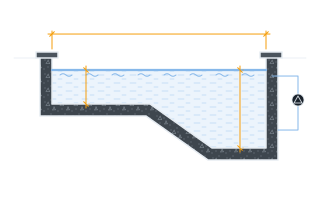
This is the input everything else depends on and the one most often wrong. Work it out from the actual dimensions and average depth rather than the figure the previous owner quoted — a 20% error here is a 20% dosing error every time.
Measured, not assumed.
Test before dosing. Chlorine falls with sunlight, temperature and bather load, so yesterday's reading is not today's.
Where you want it.
1-3 ppm is the usual residential range. Higher is not better — it irritates skin and eyes and gases off faster.
What you are dosing with.
Strength is only part of the choice. Dichlor and trichlor add cyanuric acid, which accumulates and eventually blocks the chlorine from working; cal hypo adds calcium hardness. Liquid adds neither but is weaker and does not store.
Product required
0.165 gal
The dose arithmetic is reliable; the pool volume usually is not. Add, circulate, then retest rather than dosing twice from a calculation.
- Rise required
- 1.5 ppm
- Pure available chlorine
- 75.01 g
- Product volume
- 0.17 gal
- Pool volume
- 13,210 gal
- Pool volume in US gallons
- 13,210 gal
They open the calculator with your figures already in it
Pool Chlorine Dose Calculator: 0.1651 gal — shown in imperial, US market. The link sets both, so the result they see is the one on your screen.
Show calculation logicHide calculation logic
How this was calculated
Formula source(s)
- Recommended free chlorine 1-3 ppm for residential pools — CDC Model Aquatic Health Code and WHO guidance
- 1 ppm = 1 g per 1000 L. Product strengths: sodium hypochlorite 10-15% available chlorine; cal hypo 65-73%; dichlor 56%; trichlor 90%
Inputs used
- Pool volume
- 13210 gal
- Current free chlorine (ppm)
- 0.5
- Target free chlorine (ppm)
- 2
- Product
- Liquid chlorine / sodium hypochlorite (12%)
Intermediate steps
- Rise required
- 1.5 ppm
- Pure available chlorine
- 75.01 g
- Product volume
- 0.17 gal
- Pool volume
- 13,210 gal
- Pool volume in US gallons
- 13,210 gal
Confidence note: The dose arithmetic is reliable; the pool volume usually is not. Add, circulate, then retest rather than dosing twice from a calculation.
What this calculation does not cover
- Liquid strengths are read the way the pool trade quotes them — available chlorine by VOLUME, so 12% means 120 g per litre. If your container states a WEIGHT percentage instead, divide this figure by the product's density; a 12% sodium hypochlorite solution is roughly 1.2 kg per litre (10 lb per US gallon), so the dose would be about a fifth smaller. Granular strengths are weight fractions either way.
- Assumes cyanuric acid is within range. Above roughly 100 ppm, chlorine is progressively locked up and the same dose achieves far less sanitiser activity.
- Liquid chlorine loses strength in storage — an old container may be well below its label percentage.
- Says nothing about pH, which governs how much of the free chlorine is in its active form. Chlorine dosed into high pH water does much less than the reading suggests.
Estimated cost — your price
This site holds no price list for this material — local prices vary too much to publish honestly. Enter your supplier's price and the result is costed with it.
Computed in your browser — nothing you enter is uploaded. Presented in US customary units and US trade terminology. Where a formula follows a published standard, that standard and its edition are cited beside it on this page; where none governs, the page says so. Local amendments override model codes — verify against the code in force where you build.
Sources checked 2026-08-26 · in the site-wide review of 2026-09-06 · v1.0.0
Regulatory standards & verification citations2
- Recommended free chlorine 1-3 ppm for residential pools — CDC Model Aquatic Health Code and WHO guidance
- 1 ppm = 1 g per 1000 L. Product strengths: sodium hypochlorite 10-15% available chlorine; cal hypo 65-73%; dichlor 56%; trichlor 90%
Cite this page
Your workspace
Most jobs need more than one number. Add the calculators you need next and they open right here, underneath this one — your figures stay on screen and nothing is lost to a page change.