
How the two differ in kind
Both jobs seal holes and stop air going where it should not, and they are not interchangeable — the pressure driving the leak is different by an order of magnitude.
ENVELOPE leakage is driven by the weather: wind pressure on one face of the building, and the stack effect, where warm air rising inside creates a small negative pressure low down and a positive one high up. Those pressures are modest, which is why envelope leakage is measured under an artificially imposed pressure in a blower door test rather than at the tiny differences that occur naturally.
DUCT leakage is driven by a fan, and a fan generates far more pressure than the weather does. The consequence is direct: a hole of a given size in a supply duct passes much more air than the same hole in a ceiling. It also behaves differently over time — envelope leakage happens continuously whenever there is wind or a temperature difference, while duct leakage happens only when the system runs, which is precisely when the air being lost is the air you have just paid to heat or cool.
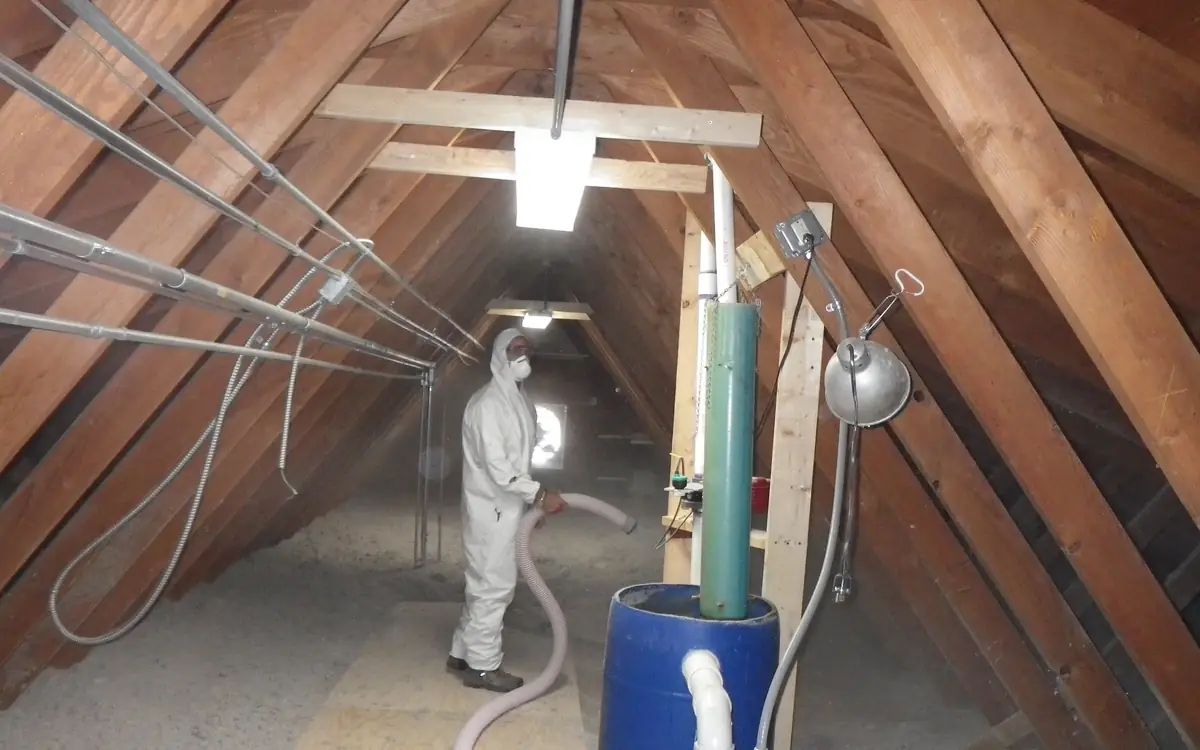
The factor that decides how much it matters is WHERE the duct is. Ducts inside the conditioned envelope leak conditioned air into conditioned space — wasteful in that the air reaches the wrong room and the fan worked for nothing, but the heat stays in the building. Ducts in an unconditioned attic, crawl space or garage are a different proposition entirely: supply leaks deliver conditioned air straight outside, and return leaks pull unconditioned air — along with dust, insulation fibres, humidity and whatever else is in that space — directly into the air being distributed through the house. Return-side leakage in a bad location is the one worth finding first.
The factors that actually differ
| Sealing the ducts | Sealing the envelope | |
|---|---|---|
| What drives the leak | A fan, at a pressure far higher than the weather produces. | Wind and the stack effect, at small pressure differences. |
| Flow through the same size hole | Much greater, because the driving pressure is much greater. | Smaller, but continuous. |
| When it happens | Only while the system runs — which is exactly when the air is most expensive. | Continuously, whenever there is wind or a temperature difference. |
| Where it matters most | Ducts outside the conditioned envelope: an attic, a crawl space, a garage. | The top and bottom of the envelope, where the stack effect is strongest. |
| Air quality effect | Return-side leaks pull attic or crawl-space air, dust, fibres and humidity directly into the supply. | Leaks draw air from wherever the path leads — a crawl space, a garage, the ground. |
| Comfort effect | Rooms that never reach temperature because their share of the air never arrives. | Draughts, cold surfaces and temperature stratification. |
| How it is measured | A duct leakage test, pressurising the duct system and measuring the flow needed to hold it. | A blower door test, pressurising the house and measuring the flow needed to hold it. |
| What to seal with | Mastic, or mastic with mesh tape on larger gaps. Not cloth duct tape, which fails. | Caulk, expanding foam, rigid material for large openings, and gasketed covers for hatches. |
| Where the leaks are | Joints, seams, take-offs, boot-to-ceiling connections, the plenum, and the equipment cabinet itself. | Top plates, recessed lights, plumbing stacks, chimney chases, the loft hatch, the rim joist. |
| Which to do first | This one, where any duct runs outside the conditioned envelope. The losses are large and concentrated. | This one, where the ducts are all inside the envelope — and it improves comfort as well. |
Which one, and when
Choose sealing the ducts when…
- Any part of the duct system runs through an attic, a crawl space, a garage or another unconditioned space.
- Rooms at the end of the run never reach temperature while rooms near the plant are fine.
- There is dust at the supply registers, or the system smells of the attic when it starts.
- A duct leakage test is required by code or by a programme, which in new construction it increasingly is.
Choose sealing the envelope when…
- The ducts are entirely within the conditioned envelope, so duct leakage is wasteful rather than lost.
- The complaints are draughts, cold floors and rooms that are hard to heat rather than poor airflow.
- Insulation is about to be added to an attic, which is the moment sealing beneath it is both cheapest and essential.
- There is frost on the underside of the roof deck or melt patterns in the snow — signatures of warm air leaking upward.
Now run your own numbers
This page holds no prices on purpose — a national average is wrong for almost every real project. Quantify both options with your dimensions and your local quotes.
Frequently asked questions
- Why is a hole in a duct worse than the same hole in a ceiling?
- Because the pressure pushing air through it is far greater. Flow through an opening depends on the pressure difference across it, and a fan produces a great deal more pressure than wind and the stack effect do — so the same physical hole passes substantially more air when it is in a pressurised duct than when it is in a ceiling. There is a second multiplier on the supply side: the air lost is air that has just been heated or cooled, delivered at the moment the system is running, so every unit lost is a unit paid for twice — once to condition it and once because the room it was meant for still needs conditioning. A ceiling leak loses conditioned air too, but slowly and at low pressure. That difference is why duct sealing so often returns more than envelope sealing per hour spent.
- Why does it matter where the ducts run?
- Because it decides whether the leaked air leaves the building or merely goes to the wrong room. Ducts within the conditioned envelope leak conditioned air into conditioned space — the heat stays in the house, so the loss is that the intended room is under-supplied and the fan did work for nothing. Ducts in an attic, crawl space or garage are outside the thermal boundary, so a supply leak delivers heated or cooled air directly outdoors. The return side is worse: a leaking return is under negative pressure, so it pulls air IN from that space, which means attic air, its dust, its insulation fibres, its summer humidity or its winter cold are drawn into the system and distributed through the house. That is an air quality problem as well as an energy one, and it is the first thing to look for.
- What should ducts actually be sealed with?
- Mastic, applied by brush or glove to every joint and seam, with fibreglass mesh tape embedded in it where gaps are wider than the mastic will bridge alone. It stays flexible, it bonds to sheet metal and to flex duct collars, and it lasts. What does NOT work, despite the name, is cloth-backed duct tape: its adhesive dries out in the temperature swings of an attic and it releases, sometimes within a couple of seasons, and a duct sealed with it is a duct that will need sealing again. Foil tapes rated and listed for the purpose are acceptable on clean, dry surfaces, though mastic is more forgiving of dust and of awkward geometry. Whatever is used, the surface has to be clean first — mastic over attic dust is bonded to the dust.
- Where are the duct leaks usually found?
- At connections rather than in the middle of a duct. The recurring locations are the plenum where the ducts leave the equipment, which is frequently the single largest leak in the system; the take-offs where branches leave the trunk; the boot connections where a duct meets a register, particularly where the boot meets the ceiling or floor and the gap was never sealed; joints in flexible duct where the inner liner was not properly clamped to the collar; and the equipment cabinet itself, including panels and filter access doors that do not seal. Building cavities used as return paths — a stud bay or a panned joist space acting as a duct — are a category of their own and are essentially unsealable; where they exist, the fix is usually to replace them with actual duct.
- How is duct leakage measured?
- By pressurising the duct system with a calibrated fan and measuring the airflow needed to hold it at a test pressure — the same principle as a blower door, applied to the ducts. The result is reported as a leakage rate, often normalised to the floor area served or to the system's design airflow, and standards and codes express their requirements in those terms. There are two variants worth distinguishing: a total leakage test, which measures everything including leaks to inside the conditioned space, and a leakage-to-outside test, which measures only the part that actually leaves the building — the second being the number that matters for energy, and the harder one to run. Doing the test before and after sealing turns the work from an assertion into a measurement, which is the only way to know it was worth doing.
- Which should I do first?
- The ducts, if any of them run outside the conditioned space — that is the one situation where the answer is clear, because the losses are large, concentrated at a handful of connections, and cheap to fix relative to what they cost. If the entire duct system is inside the envelope, the envelope becomes the priority, because duct leakage is then wasteful rather than lost while envelope leakage still takes heat out of the building. In an attic where both jobs are needed, do them in the same visit and seal the ducts before insulation is added over anything, for exactly the reason that applies to ceiling bypasses: once the insulation is in, the connections are buried and the job has to be done twice.
- Can sealing ducts cause a problem?
- It can change the system's pressures, which is why the airflow should be checked afterwards rather than assumed. A leaky system is, in an accidental way, relieving itself: some of the air escapes rather than passing through the resistance of the full duct run. Seal the leaks and all of that air now goes through the intended path, which raises the static pressure the fan sees. On a system that was already restricted — undersized ducts, a dirty filter, a closed damper — that can push the fan further up its curve, reducing airflow across the coil and, in a heating system, potentially triggering a limit control. The remedy is not to leave the leaks but to fix what was restricting the system, which was a problem before the sealing and simply invisible. Measuring static pressure before and after is the check.
- Is the best answer to bring the ducts inside?
- Where it is achievable, yes, and it removes the problem rather than mitigating it. Ducts within the conditioned envelope cannot lose conditioned air to the outdoors and cannot draw attic air into the supply, no matter how well or badly they are sealed — so the whole category of loss disappears. The routes to it are dropped ceilings and interior chases in new construction, or converting an unvented attic into conditioned space by insulating at the roof line rather than at the ceiling, which brings the ducts inside the thermal boundary without moving them. Both are design decisions with real cost and, in the case of an unvented attic, real moisture-control requirements that vary by climate and code. Sealing is what you do when the ducts are where they are.